
Shopping Cart
- Tu Aloe Canario
- Canarian Aloe Vera
- 1 likes
- 276 views
- 0 comments
Keeping an aloe vera in a pot lets you watch up close a plant closely linked to Canarian cosmetics. To start caring for it, it's worth looking at three things together: where you place it, the container and how you manage water.
In this guide we offer a starting point for growing at home. Recommendations should be adapted to the climate and real conditions of your home. An exposed terrace, an indoor corner and a covered patio are different situations, even in the same town.
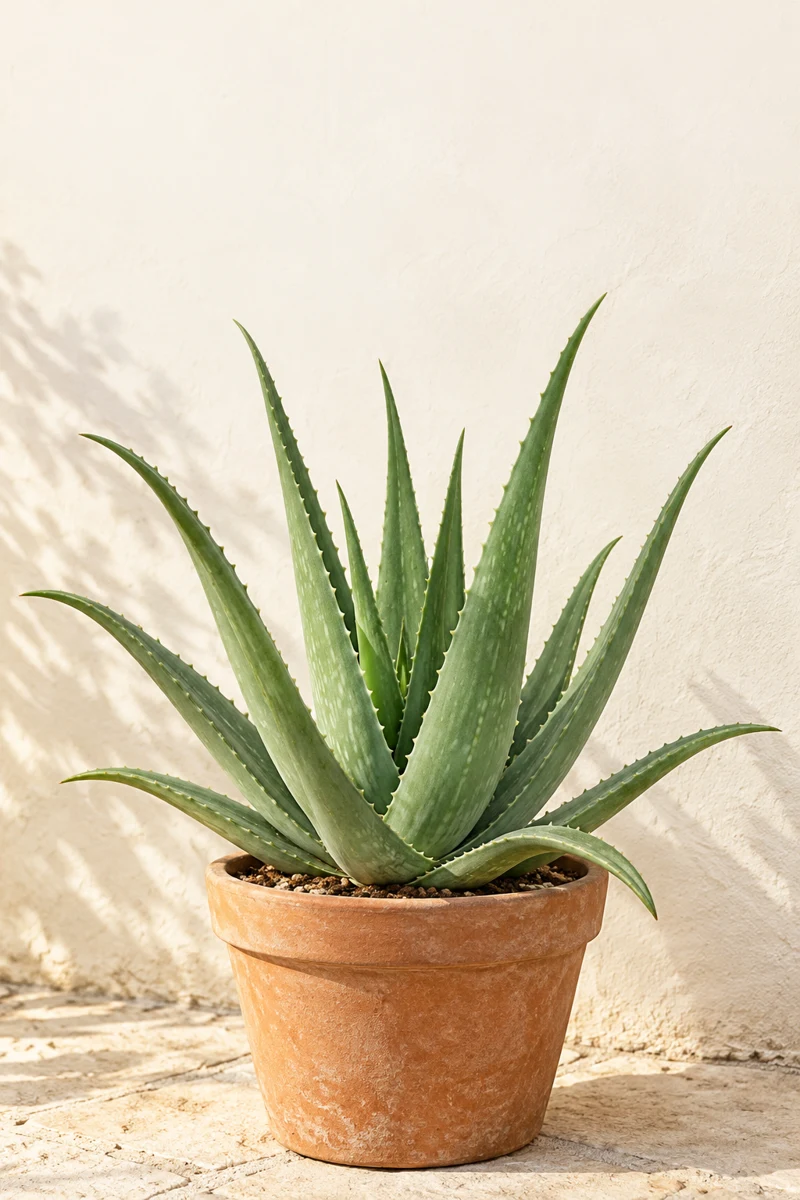
Editorial illustration of an aloe vera plant in a terracotta pot.
Choose a spot with good light
Observe the location before placing the pot
The RHS Aloe vera profile recommends a sunny, sheltered position for the species. Its guide to the genus advises plenty of light and ventilation. Check how much light your chosen spot really gets throughout the day, and how that changes between seasons.
A simple record can help: note where the pot is and take a photo from the same point every so often. Comparing observations is more useful than constantly moving the plant without remembering where it was and how it was doing.
Prepare a pot that drains well
Container and growing medium work together
The RHS guide to aloes recommends cactus compost or mixes with mineral material that improve drainage. It also notes that the genus doesn't do well in permanently wet compost. The aim is to let excess water drain out of the container.
The guide to succulents in pots warns that a container that's too big can leave too much damp compost. When checking the pot, consider the size of the plant and make sure no water collects around its base.
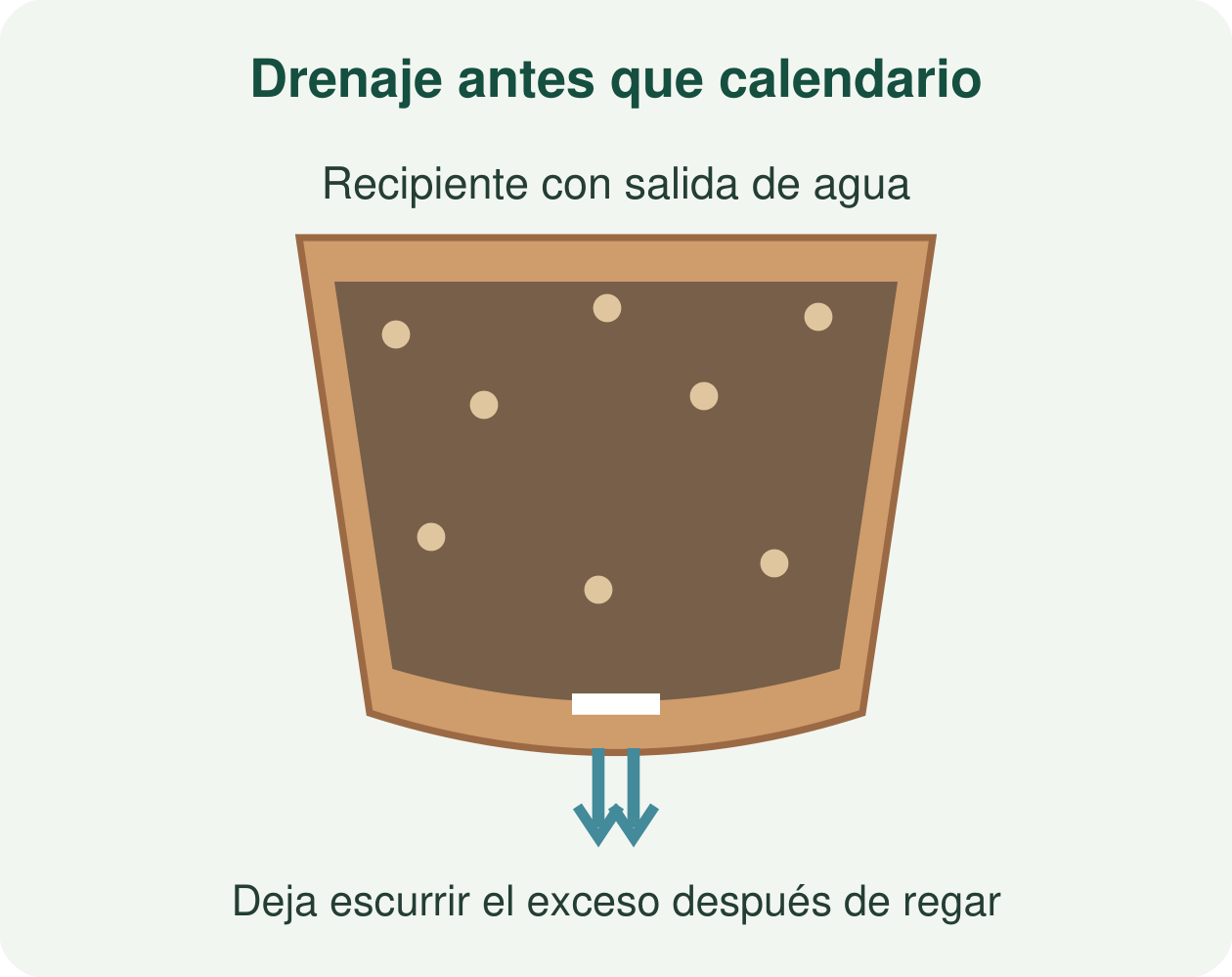
Drainage diagram. The container must let excess water drain away.
Adjust watering to real conditions
Check before you water
Before adding water, look at the compost and the state of the plant. For indoor succulents, the RHS suggests checking that the surface is dry during the growing season and letting excess water drain away after watering. Avoid making a fixed day on the calendar your only cue to water.
Tell growth from rest
The Aloe vera profile suggests moderate watering during growth and much less during winter dormancy. Seasonal guidance from a British guide should be interpreted for your own climate: in the Canaries, observe your local conditions before applying advice from elsewhere.
Follow how the plant develops
You can keep a card with four details: date, location, compost check and watering done. Add a photo when you want to record a change. The record helps you remember decisions and describe a question better if you ask a garden centre for advice.
The RHS mentions separating offsets (pups) as a way to propagate aloe. If you'd like to do this, read a specific guide first and prepare the container and compost. You don't need to do every possible task as soon as you buy a plant.
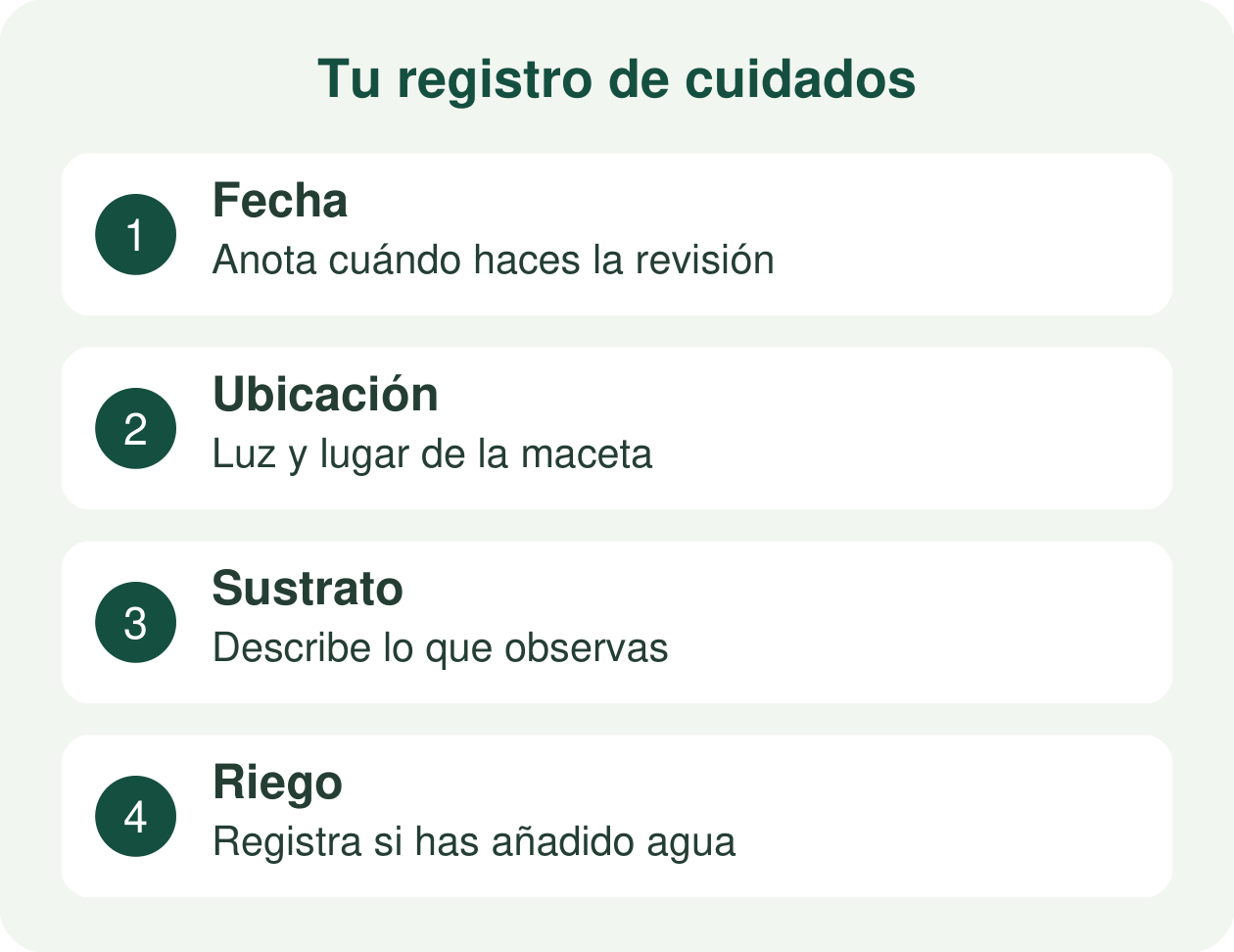
Our visual record for tracking the plant’s care.
Frequently asked questions
Does aloe need water every week?
It depends on the season and growing conditions. Check the compost and adjust care to how active the plant is; use the calendar to record what you do, not as an automatic obligation.
Can I keep it where there are pets?
The RHS warns that Aloe vera is harmful if eaten, including by pets. Place the pot where animals and children can't nibble it, and wear protection when handling leaves with toothed edges.
Is a leaf from my plant the same as a cosmetic?
A plant and a formulated product have different uses and conditions. In our guide to aloe vera in cosmetics we explain how the raw material differs from the finished product. This article is about growing aloe as an ornamental plant, not about making products for the skin or for consumption.
Learn more about aloe
Observing a plant calmly lets you ask increasingly specific questions. Start with location, drainage and watering, keep your notes and check what has changed before altering anything else. That small habit helps you get to know the aloe you have at home.
Sources

Comments (0)