
Shopping Cart
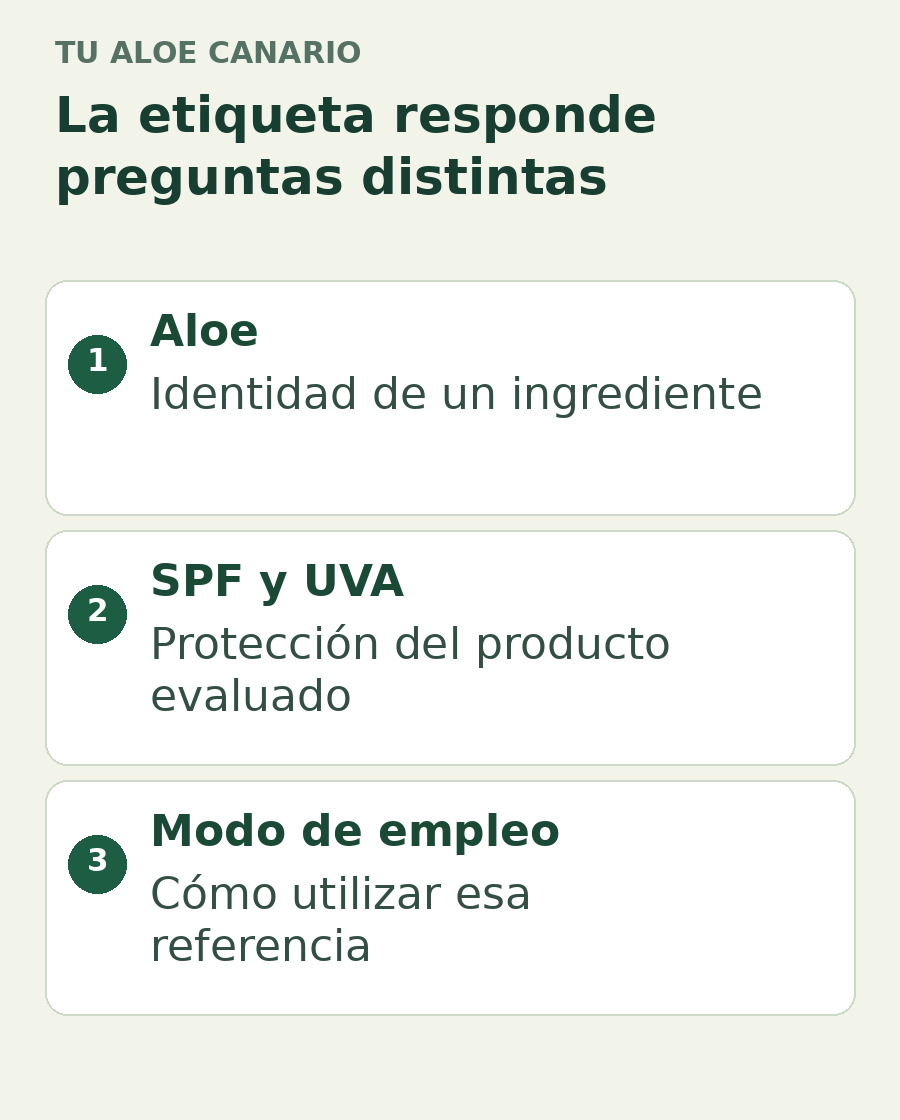
Finding aloe on a label doesn't answer every question about the product. One of the most important when planning time outdoors is whether you're looking at a care cosmetic or a sunscreen with declared, tested protection.
At Tu Aloe Canario we help you separate that information. An ingredient's name and a pleasant texture are not a sun protection factor. We need to identify what the specific product does and check its labelling.
The word aloe is not an SPF
The European recommendation on sunscreen products links UVB and UVA protection claims to criteria and tests on the product. We can't infer a protection factor from the presence of an ingredient, a trade name or a photo of a plant. [1]
For example, a name that includes "24h" doesn't by itself tell you its SPF. Nor should you work out a safe time in the sun from that word. In every case, the useful question is: what protection does this product declare and substantiate for its intended use?
Moisturising and sun protection are different questions
One cosmetic may be presented to moisturise and another to protect against solar radiation. Some products combine functions, but that must be checked in their specific information. We don't attribute the same properties to every gel or cream with aloe.
What to check on a sunscreen label
Spain's medicines agency (AEMPS) advises choosing products that protect against both UVB and UVA, and reading their instructions carefully. SPF relates mainly to protection against the radiation that causes redness; UVA information covers another part of the assessment. [2]
Keep those details together when comparing two products. Don't rely on a single word highlighted on the front. Check how to apply it, the warnings and the storage conditions on your own pack.
An SPF number is not a timer
We don't turn an SPF into a multiplication of minutes that allows you to stay in the sun. AEMPS reminds us that no sunscreen gives total protection and that other protective measures must be kept up. [2] Choosing and using a sunscreen means considering the circumstances of exposure, not just the number on the label.
Plan a day out with more than one form of protection
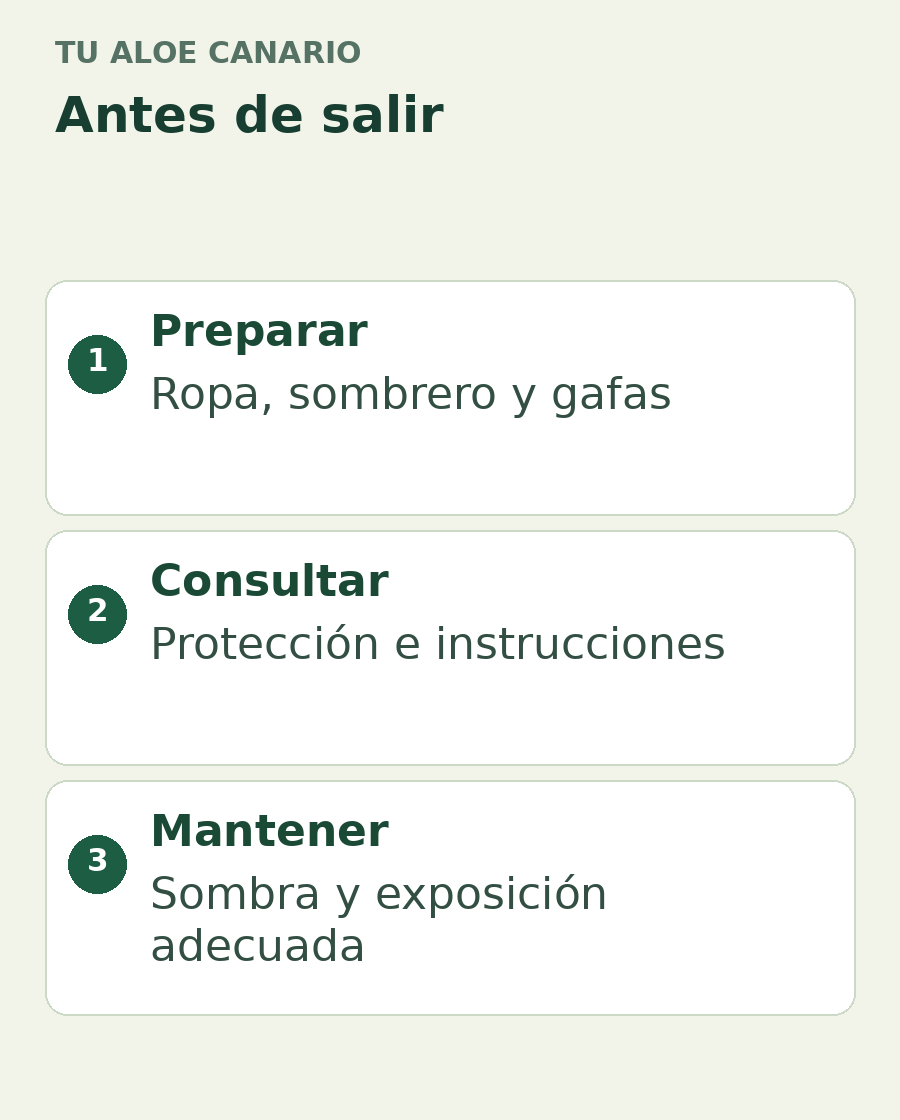
The AEMPS guidance includes clothing, a hat and sunglasses as part of protection and advises avoiding the hours of strongest exposure. We suggest getting those items ready before you go out, together with a suitable sunscreen, rather than deciding everything once you're already outside. [2]
Keep the product instructions to hand and check how to apply and reapply it. AEMPS has a specific page with advice on quantity and reapplication; read it and also follow the labelling of the product you use. [3]
Where aloe aftercare fits in
Back in your routine, you can choose a care cosmetic according to its purpose and instructions. That doesn't make up for excessive exposure or give it retroactive sun protection. If your question is how to identify a moisturiser, check its function and label separately.
We don't present a cosmetic gel as a treatment for sunburn. If you have an injury, significant pain or another reaction that worries you, seek medical advice. An article about choosing cosmetics doesn't replace that assessment.
Our card for comparing without mixing up functions
Note the exact name, the stated purpose and the SPF/UVA protection shown, if any. Add the instructions and where you'll keep it. If one product doesn't declare sun protection, mark that box "not declared"; don't fill it in with data from another cream.
This simple separation also helps when buying for someone else. You can check which product they want and what the pack says, without assigning a skin type or clinical need from a photo.
Frequently asked questions
Does an aloe gel replace sunscreen?
We shouldn't treat it as sun protection just because it contains aloe. For that you need a product with the corresponding protection declared and substantiated for its use.
Does a cream called 24h let you stay in the sun all day?
No. The trade name doesn't set an exposure time or replace reading the SPF, UVA protection and directions.
Does a label with an SPF mean other measures aren't needed?
AEMPS points out that protection is never total. Keep using clothing, shade and sensible exposure as well as following the sunscreen's directions. [2]
Learn more
See our guide to aloe in cosmetics to tell plant, ingredient and formula apart. For sun protection, find more information in the official AEMPS sources linked below.
Sources
[1] European Commission · Recommendation 2006/647/EC on sunscreen products
[2] AEMPS · Ten tips for safe sun exposure (in Spanish)
[3] AEMPS · Advice on proper sun protection (in Spanish)
Sources consulted on 30 October 2026.

Comments (0)