
Shopping Cart
- Tu Aloe Canario
- Canarian Aloe Vera
- 1 likes
- 287 views
- 0 comments
It is one of the questions we hear most often in the shop, usually with the bottle in one hand: "What is this? Isn't it just aloe?" Fair question. Many people grew up watching a grandmother cut a leaf and rub the gel straight onto the skin, and assume the ideal product would be exactly that, in a bottle.
What happens to the gel once the leaf is opened
Aloe gel is around 98-99 % water, with long-chain sugars (polysaccharides such as acemannan), some minerals and a slightly acidic pH. Inside the leaf the plant protects it. Once it is out, it is exposed to air, light and the microorganisms on our hands and in the kitchen. Researchers put it plainly: exposed to air, the gel breaks down quickly and loses much of its activity (Nazemi et al., 2017). Homemade gel should live in the fridge and be used within a week.
What a preservative does (and what it does not)
A cosmetic preservative has one job: to stop bacteria, moulds and yeasts growing in the product while you use it. In the EU, the Cosmetics Regulation (EC) 1223/2009 only allows preservatives from a closed list (Annex V), each with a maximum concentration, and every product needs a safety assessment before it is sold. A small amount of preservative does not make the gel artificial: aloe is still the main ingredient.
"Preservative-free" and "100 % aloe"
A water-rich product that is opened and used for months needs some form of protection. The European Commission's technical document on cosmetic claims advises against "preservative-free" when the product contains ingredients that do that job anyway. "100 % aloe" often refers to the aloe ingredient being undiluted juice, not to the whole bottle. We prefer to be clear: our gel contains certified organic Canarian aloe vera as its main ingredient and a small amount of preservative.
Reading the label in one minute
- Where is the aloe? Ingredients are listed from highest to lowest amount. Aloe (Aloe Barbadensis Leaf Juice) should be first or near the top.
- The open-jar symbol with a number and "M" (6M, 12M) tells you how many months the product keeps once opened.
- Responsible person and batch number must appear on every cosmetic sold in the EU.
- No medical promises. A cosmetic moisturises, soothes and refreshes. It does not cure illnesses.
Make it last to the last drop
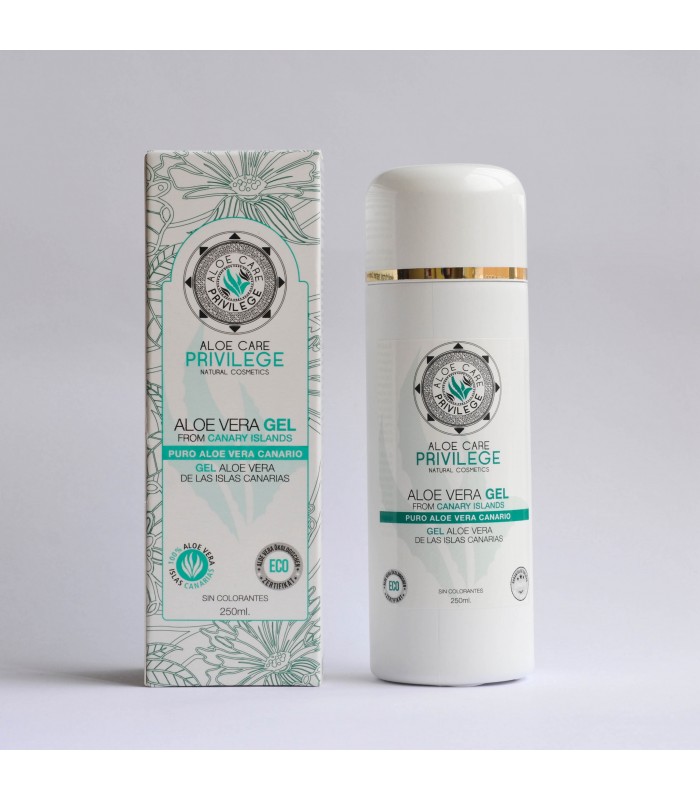
Close the bottle after each use, use clean dry hands, never add water, keep it away from heat and sunlight (in summer the fridge is perfect), and stop using it if it changes smell or colour. You can find ours here: Canarian aloe vera gel 250 ml.
For general information only; not a substitute for medical advice. Sources: Regulation (EC) 1223/2009; European Commission, technical document on cosmetic claims; Nazemi et al., 2017; Comas-Serra et al., Gels, 2023.
Comments (0)