
Shopping Cart
Choosing a soap doesn't end when you buy it. Where you leave the bar after use and how you prepare its holder are details you can sort out in a few minutes. In this guide we suggest how to organise that space for an everyday aloe vera soap.
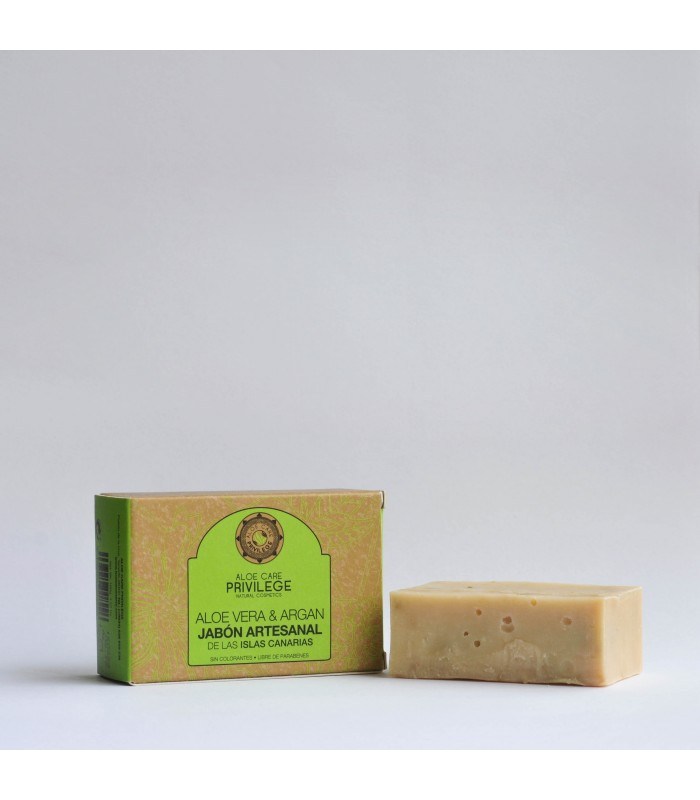
We use our Aloe Care Privilege handmade aloe vera and argan soap as an example. Its product page presents it for hands and body and states a weight of 100 g. Here we focus on handling the solid format, without giving it a number of washes or a lifespan we haven't measured. [1]
Start with the directions for your product
Our soap's product page says to wet the skin, work up a lather with a gentle massage and rinse well with water. It also includes precautions about eyes, mucous membranes and open wounds, and states that it should not be used on children under three. Always check the current label on the bar you bought. [1]
Keep the product information even if you remove the wrapper. A clear photo of the name, batch and instructions can be useful if you later want to ask us something. If you use several bars at home, make sure you don't lose track of which is which.
Find a holder that lets water drain away
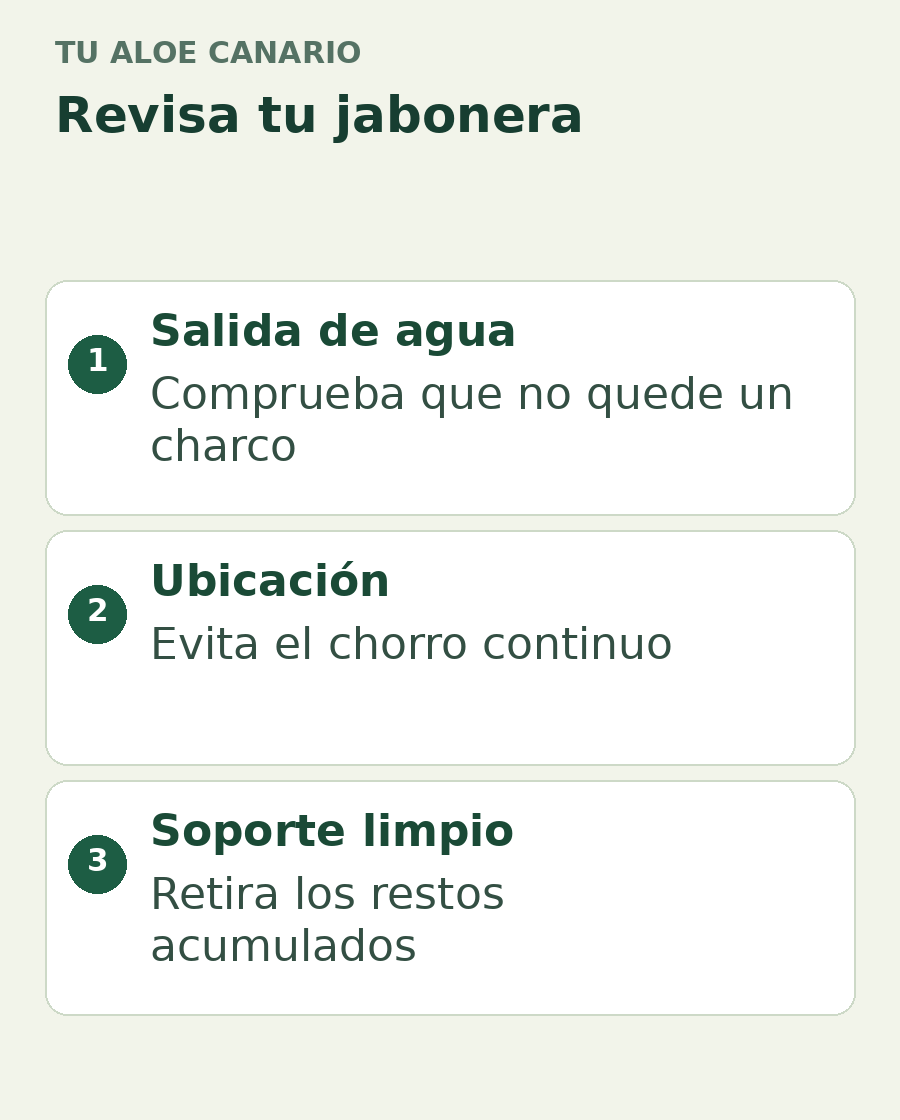
Our practical suggestion is to check the soap dish after use. If the bottom holds water in contact with the bar, empty it and see how the dish drains. A rack or a base with drainage keeps the soap away from that standing water.
As a storage reference for solid formats, Lush advises keeping one of its soaps in a cool, dry place such as a soap dish. That's the manufacturer's instruction for its own product, not a durability test of our soap. [2] In our routine we prioritise drainage and the directions on the pack.
Check the position too
Notice whether the holder is constantly hit by the shower or splashed by the tap. You can place it somewhere convenient to pick up and put down the bar, with less water collecting. You don't need a soap dish made of any particular material to do this check.
Do a quick check when you finish: is there water underneath? Does the base drain? Is the holder clean? These are questions about your space. We don't promise that any change will multiply the life of the bar by a specific amount.
Keep the soap dish clean
Remove build-up and clean the holder according to its material. Let it drain before putting the bar back. AEMPS advises good practice in using and storing cosmetics; looking after the place where we use them is part of an organised routine. [3]
If the soap changes in appearance, don't draw conclusions from a photo alone. Keep the product details, explain how you stored it and ask before improvising any mixture. The texture of a wet bar alone doesn't reveal its composition.
Packing it in a toiletry bag
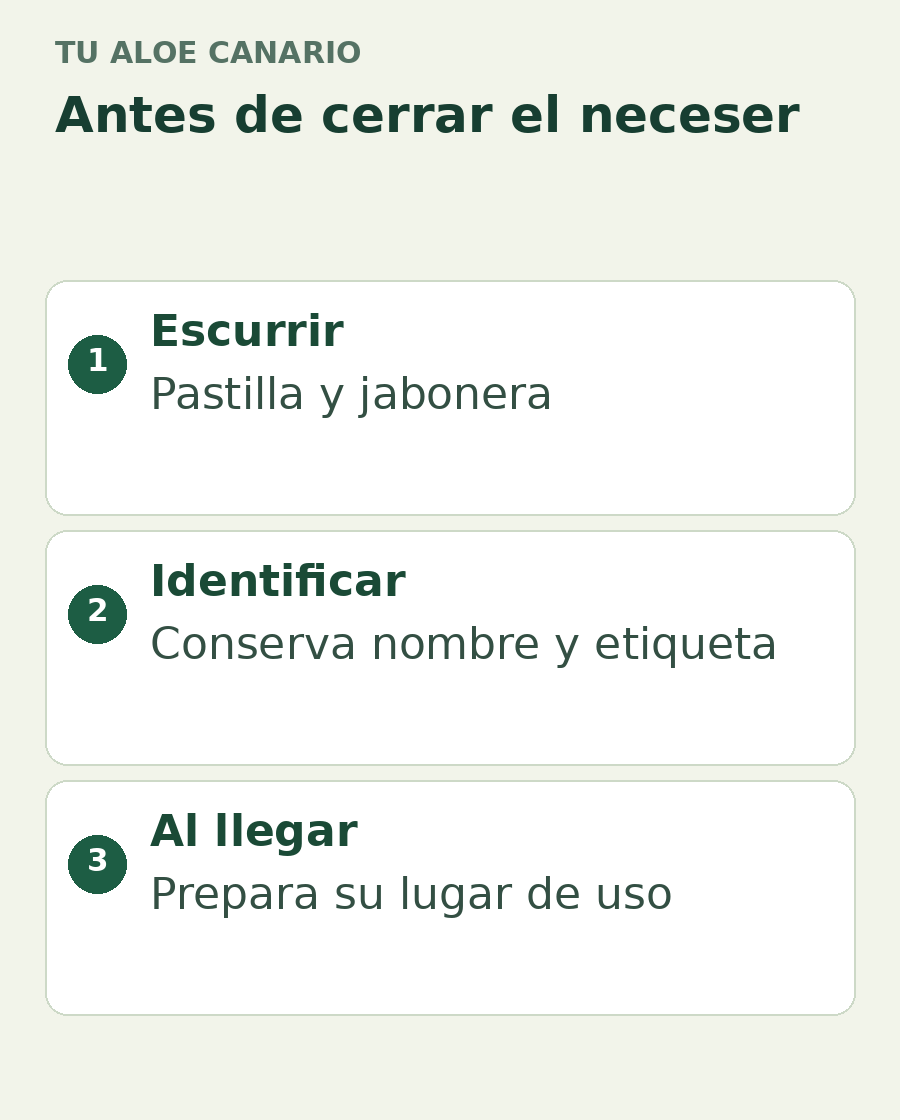
Before closing a travel soap tin, let the bar and holder drain. If you have to pack it while still damp, keep it separate from the rest of your luggage and, on arrival, set it up again somewhere it can drain. This is an organisational tip, not a guarantee of how it will keep on any journey.
Keep the soap identified and check the manufacturer's directions. We don't suggest turning the leftovers into a liquid preparation by adding water and other ingredients. A home-made mixture would have different conditions from the finished product you bought.
A small change you can check at home
Over several uses, observe the holder and note whether it holds water. You don't need to weigh the bar every day to improve that detail by the basin. If you decide to compare two soap dishes, change one thing at a time and describe what you actually see.
Personal experience helps you choose a convenient format, but it doesn't replace the product's instructions. To choose between products, see the product page for our handmade aloe vera and argan soap.
Frequently asked questions
Can we say the bar will last a month?
We don't have a measurement that guarantees it. Use and handling vary between people and spaces. That's why we talk about a drainage routine without promising a number of days.
Can a hand and body soap be used anywhere else?
We shouldn't extend its purpose on our own. Follow the areas and precautions given for that specific product.
Does the word handmade replace the instructions?
It describes a presentation and a declared way of making it. To use the cosmetic you still need its identification, composition and directions.
Learn more
If you're still choosing a format, see our comparison of gel, cream and soap. Each has a different place in your routine; a cleansing bar isn't the same as care that stays on the skin.
Sources
[1] Our handmade aloe vera and argan soap product page
[2] Lush · Storing a bar in a cool, dry place
[3] AEMPS · Good practice in using cosmetics (in Spanish)
Sources consulted on 30 October 2026.

Comments (0)