
Shopping Cart
- Tu Aloe Canario
- Canarian Aloe Vera
- 0 likes
- 387 views
- 0 comments
TU ALOE CANARIO · ALOE CARE PRIVILEGE
When you read about aloe vera, you come across names that can seem interchangeable. Acemannan and aloin are different compounds. Understanding the difference helps you interpret explanations about the plant and ask better questions about a cosmetic ingredient.
At Tu Aloe Canario we explain this distinction step by step. We'll start with the names and finish with a short guide to reading a report without confusing composition with results on the skin.
What acemannan is
Acemannan is a polysaccharide found in aloe: it belongs to a group of molecules made of linked sugar units. IASC uses it as an analytical marker for aloe in its industry standard. Analysing it answers a composition question: what material does the sample contain? [1]
That's why you may find it named in technical explanations about raw materials. Keep the full word in mind when you look at a report: acemannan is not another way of writing aloin.
What aloin is
Aloin is a compound associated with the leaf's latex or exudate. The IASC glossary places this exudate between the rind and the inner tissue and distinguishes it from the clear central material. Describing the leaf as if all its parts had the same composition hides an important difference. [2]
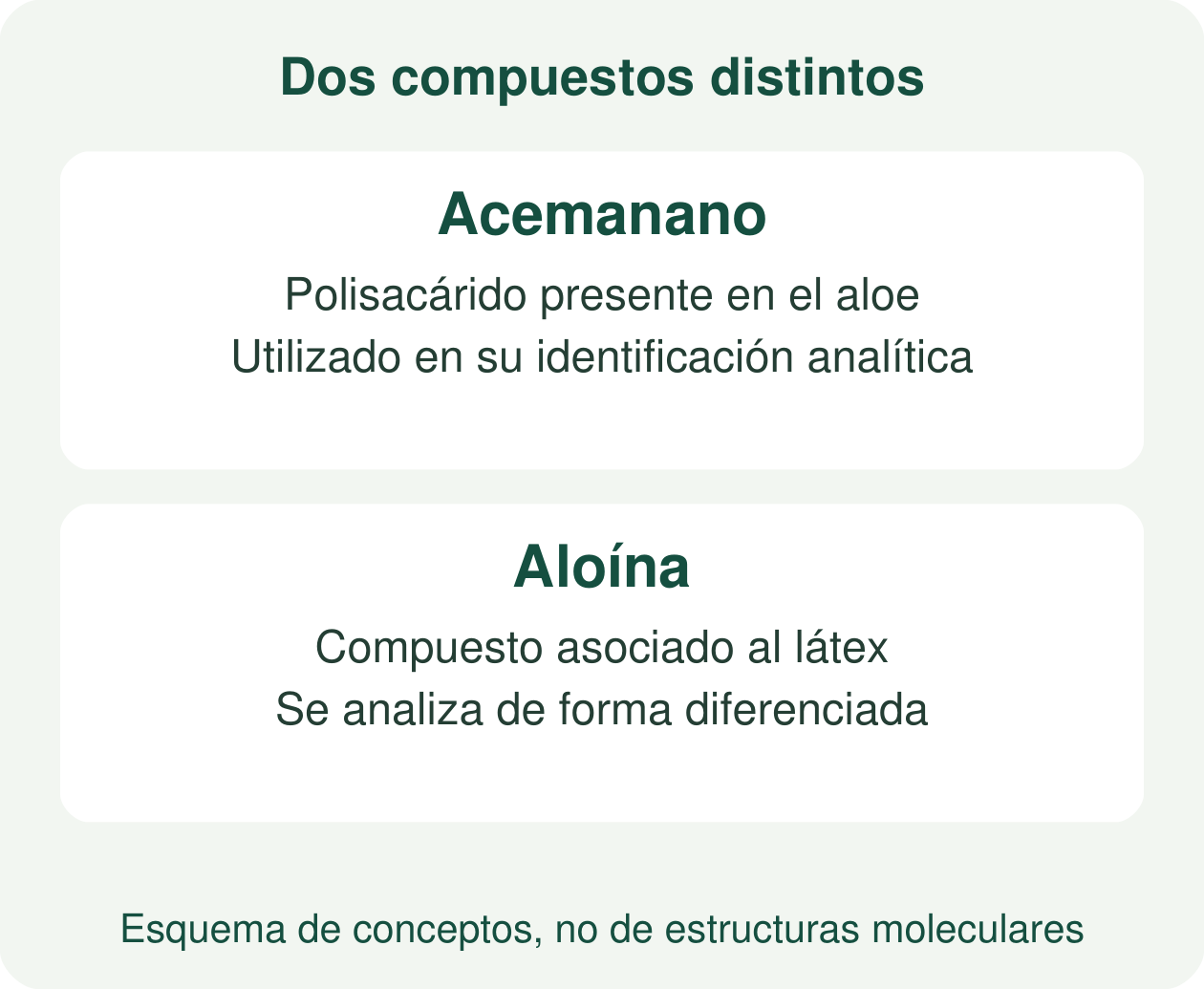
Tu Aloe Canario diagram based on IASC definitions. The symbols are conceptual.
Why they are analysed separately
The IASC certification programme includes separate tests for acemannan and aloin. Its table of analytical criteria provides for nuclear magnetic resonance to characterise aloe content and, for aloin, high-performance liquid chromatography or another suitable method approved by the programme. These are criteria of that industry scheme; we don't present them here as a certification of our products. [3]
The practical consequence is simple: a result for one compound doesn't automatically tell you about the other. If you're given a lab report, look for the exact name of what was measured before interpreting the conclusion.
Four details to read together
We suggest reading sample, compound, result and method together. Add the date and batch when they appear. That way you can explain precisely which document you have and what you want to clarify, instead of comparing two numbers without context.
Tu Aloe Canario reading guide. It contains no lab results or product data.
As an exercise, imagine two reports: one for a raw material and one for a finished cream. Before comparing their results, ask whether they describe the same material and express the measurement in the same way. This example is a reading guide, not an Aloe Care Privilege lab report.
What this tells us about an aloe vera cosmetic
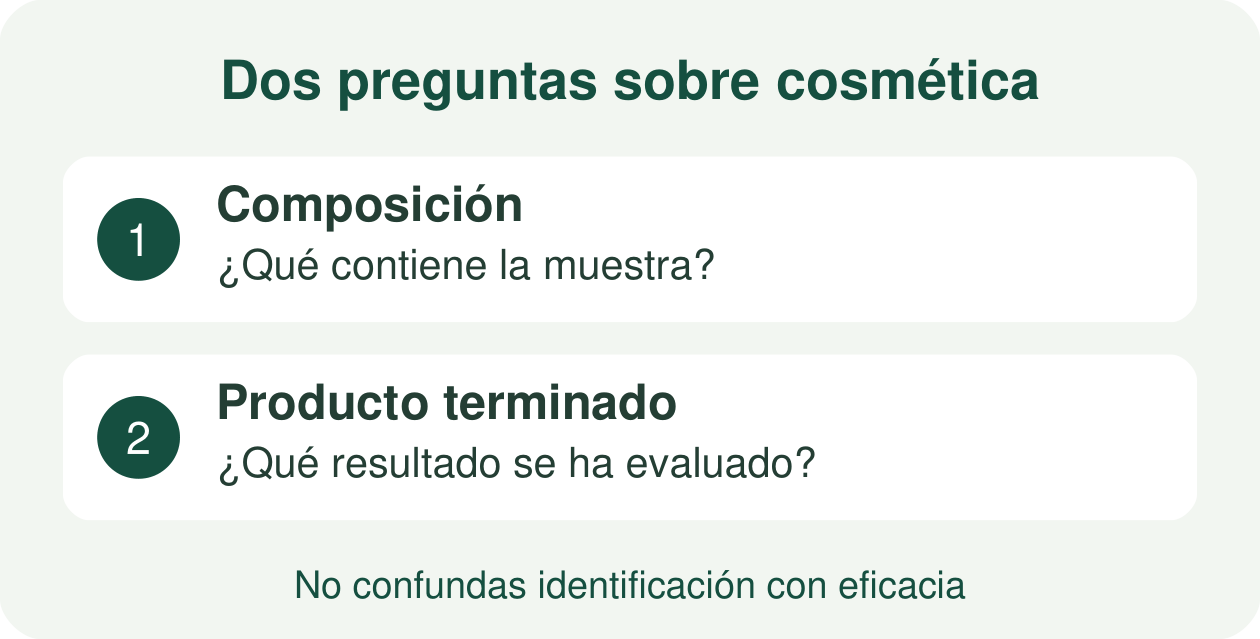
Knowing an ingredient and assessing a finished cosmetic are related but different tasks. The technical document on claims available from the Spanish medicines agency (AEMPS) explains that transferring an ingredient's properties to the final product requires proper substantiation. An analytical identification alone doesn't prove how long hydration lasts or any specific effect on the skin. [4]
When you want to choose one of our cosmetics, start with its purpose and its product page. For a technical question, tell us the product name and the information you need: we can then tell a question about composition from one about application or experience of use.
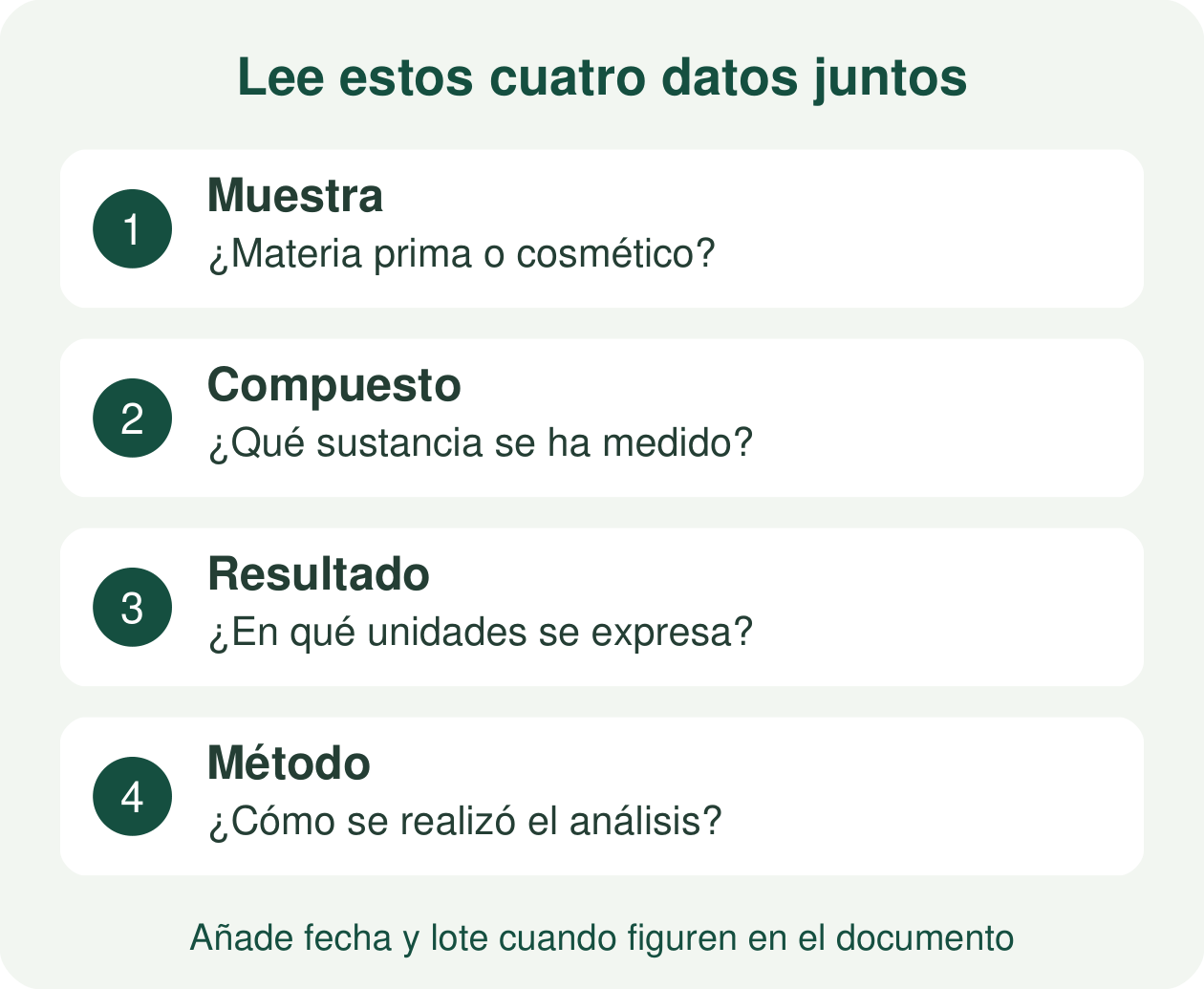
Reading guide; it does not reproduce a lab report for our products.
Frequently asked questions
Are acemannan and aloin two names for the same compound?
No, they are different compounds. The first is a polysaccharide used to identify aloe analytically; the second is associated with the leaf latex. That difference is the starting point for reading their results.
Does a raw-material report fully describe my cream?
To understand it, we need to know which sample was analysed. Documentation for an ingredient gives information about that ingredient; a claim about the cream must be backed by data relevant to the formula and the result advertised.
What should I ask for when looking at a lab report?
Ask for the sample identification, the compound analysed, the result with its units and the method used. Also keep the date and batch: they tell you which material the measurement refers to.
Learn more
Continue with our guide to Canarian aloe vera in cosmetics to follow the journey from plant to ingredient to formula. If you're choosing a format, see also how to choose between gel, cream and soap.
Sources
[1] IASC: aloe FAQs.
[2] IASC: glossary of aloe industry terms.
[4] Technical document on cosmetic claims, available from AEMPS; July 2017 version (in Spanish).
Tu Aloe Canario · Aloe Care Privilege. Sources reviewed on 28 October 2026. Original explanatory illustrations.

Comments (0)