
Shopping Cart
- Tu Aloe Canario
- Canarian Aloe Vera
- 0 likes
- 205 views
- 0 comments
TU ALOE CANARIO · ALOE CARE PRIVILEGE
A plant with fleshy, pointed leaves can look like an aloe at first glance. The rosette shape, with leaves growing from a centre, also appears in agaves. If you want to know what's in your pot or recognise a plant in the garden, it's worth gathering several clues before naming it.
In this guide we compare two specific species: Aloe vera and Agave americana. The comparison will help you observe them; to confirm a doubtful plant, keep its label or ask a garden centre with photos of the whole plant.
Aloe vera and agave belong to different families
The botanical name gives a first distinction. Kew recognises Aloe vera as an accepted species in the family Asphodelaceae and lists Aloe barbadensis among its synonyms. The university profile of Agave americana places that species in Asparagaceae. They are different genera and species. [1] [3]
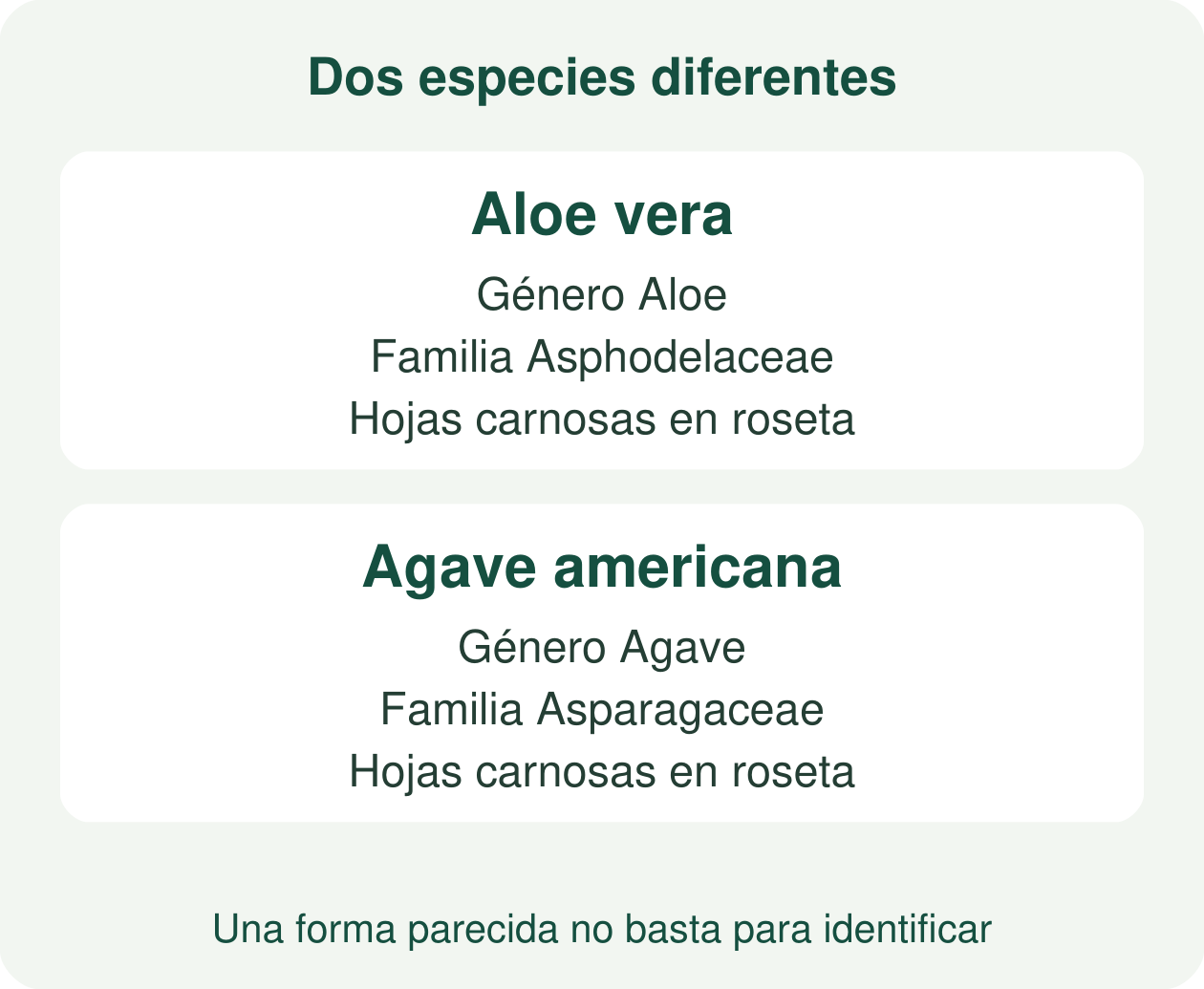
Original botanical diagram by Tu Aloe Canario. Classification checked against Kew and NC State Extension. The rosette shape is a shared trait.
Why common names can mislead
The Agave americana profile even lists the English common name "American aloe". Finding the word aloe in a common name isn't enough to identify the species. When you buy a plant, keep a photo of its label with the full name, as well as whatever name you use at home.
Differences you can see in the leaves
The university description of Aloe vera mentions thick, fleshy, pointed leaves with small white teeth along the edges. Agave americana has a rosette of large, long, spiny leaves, usually blue-green to grey-green. [2] [3]
These clues work best together. When taking notes, separate what you see from what you assume: "leaves grouped from the base" is an observation; "it must be aloe because it ends in a point" is a conclusion that still needs checking. The size of a young plant also doesn't tell you how big it will grow.
A useful observation doesn't require cutting a leaf
Photograph the whole rosette, then a leaf edge without touching the tips. Add a side view and a size reference placed at a distance. This small series shares more information than a single close-up. Don't cut or squeeze leaves to look for an inner texture as proof of identity.
Flowering adds another clue
NC State describes Aloe vera flowers as tubular, grouped in long clusters; the plant can flower several times during its life. In Agave americana, the tall flower stalk branches towards the top, with clusters of flowers at the ends. After flowering the main plant dies, although offsets may remain at the base. [2] [3]
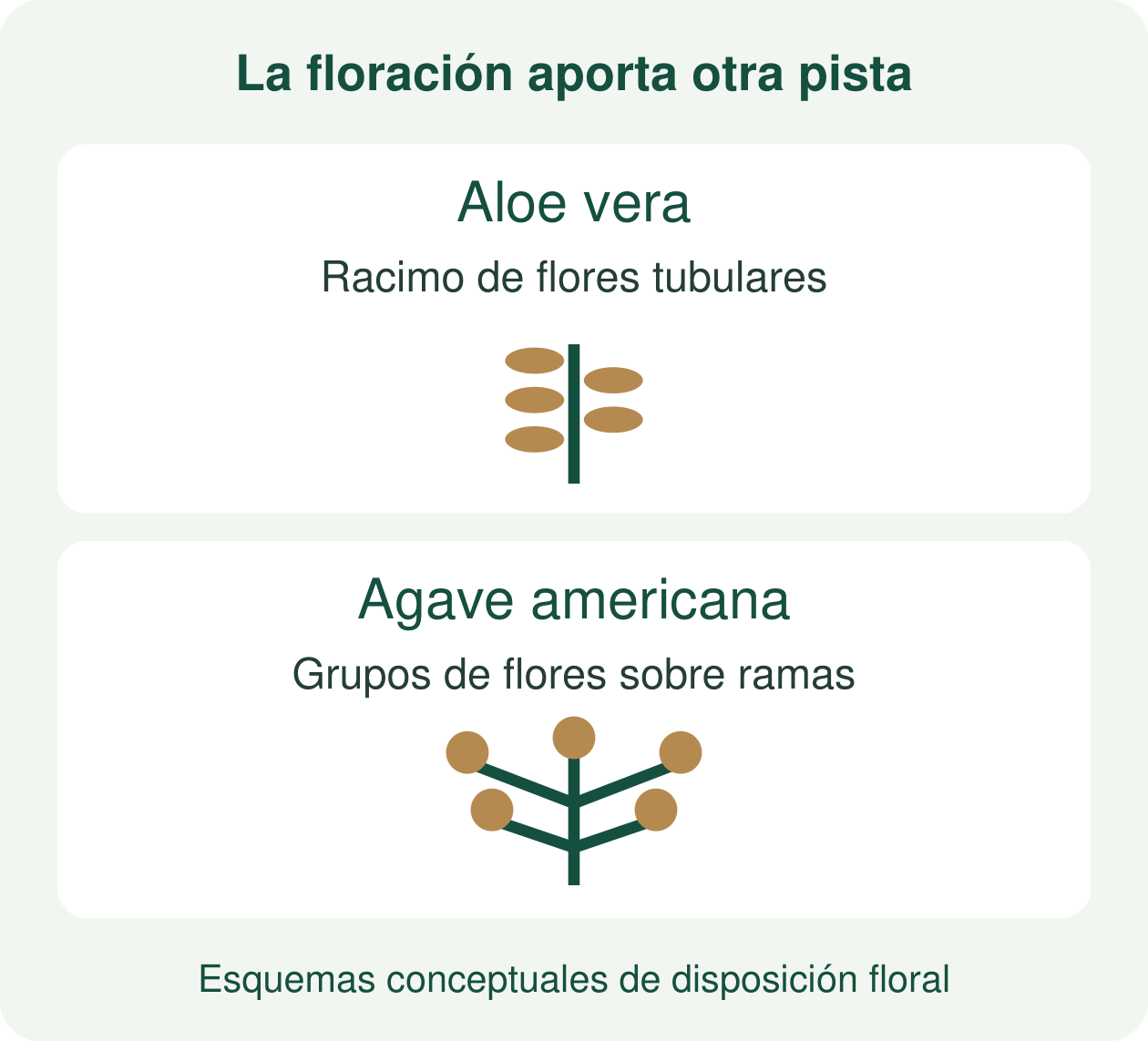
Original botanical illustration based on NC State Extension descriptions. Proportions are simplified and do not show real sizes.
If your plant hasn't flowered yet, that clue simply remains open. Keep photos of how it develops and check its identification again when new structures appear. The absence of flowers in a photo doesn't by itself tell you which species you're looking at.
A simple card to take to the garden centre
Gather the name on the label, where you bought it and four photos: whole plant, side view, leaf edge and flowers if any. Note what you want to confirm. If you no longer have the label, say so; that way whoever helps you knows from the start what information is missing.
As a precaution, avoid contact with agave sap: its university profile warns of contact dermatitis. Knowing a plant's name also doesn't mean you have instructions to make a skin product from it. This comparison has a botanical and ornamental purpose.
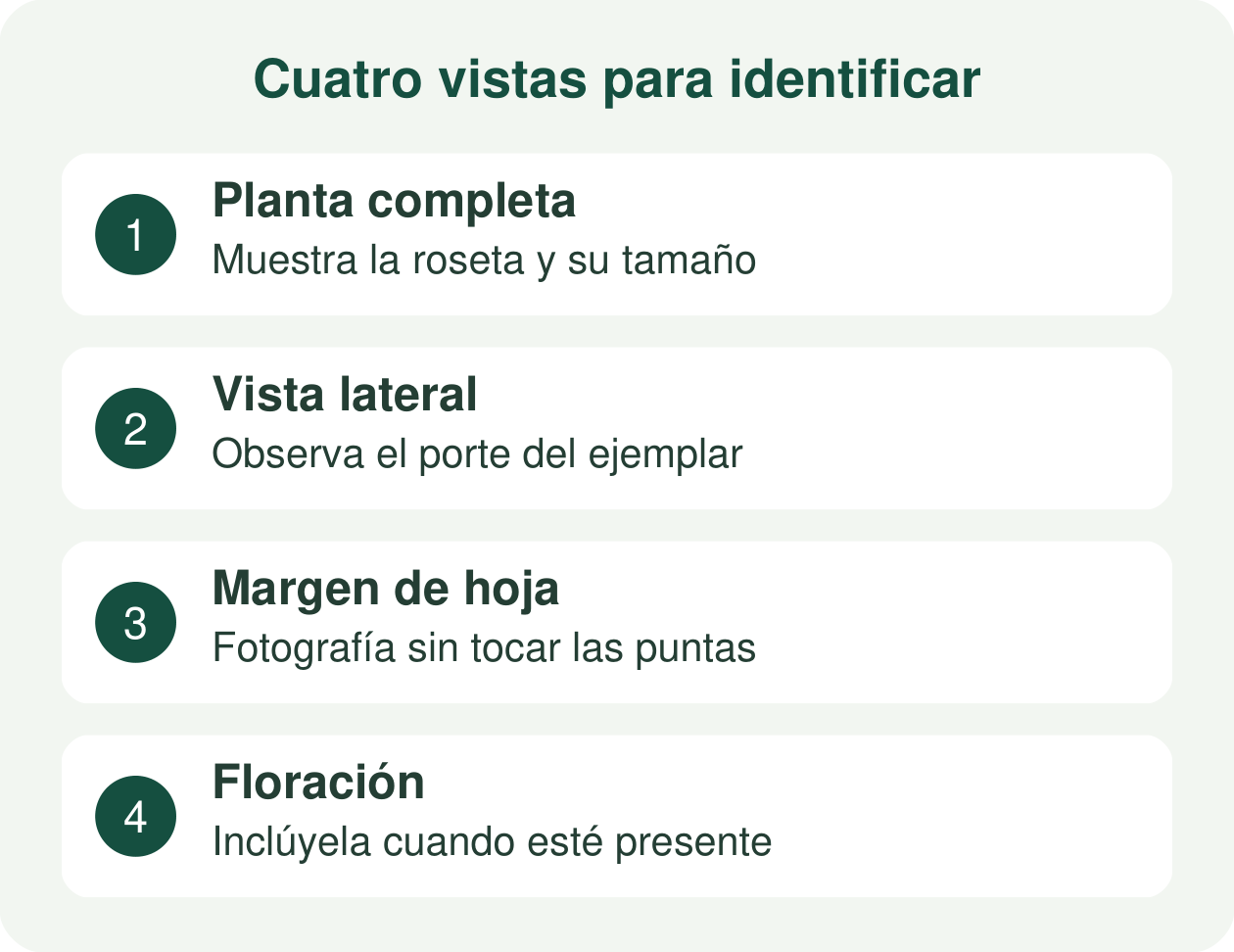
Four views give more information than a single close-up.
Frequently asked questions
Are all rosette plants aloe vera?
Rosette describes how the leaves are arranged, not a particular species. In the two examples in this guide it's a shared trait; identification needs more information.
Is Aloe barbadensis necessarily a different species?
Kew lists it as a synonym of Aloe vera. A label with that name should be read in that botanical context. It should not be confused with Agave americana.
Can I apply this comparison to any aloe or agave?
This article compares two particular species. For another botanical name, check its specific profile and avoid turning the traits of these examples into universal rules.
Learn more
If you're interested in the journey from plant to formulated cosmetic, continue with our guide to Canarian aloe vera in cosmetics. To recognise plants, the botanical profiles linked below let you extend the comparison with reference descriptions and photos.
Sources
[1] Royal Botanic Gardens, Kew: Aloe vera in Plants of the World Online. Accepted name, synonyms and classification.
[2] NC State Extension Gardener Plant Toolbox: Aloe vera. Leaves and flowering.
[3] NC State Extension Gardener Plant Toolbox: Agave americana. Classification, common names, leaves, flowering and sap warning.
Tu Aloe Canario / Aloe Care Privilege. Sources reviewed on 27 October 2026. Original explanatory diagrams.

Comments (0)