
Shopping Cart
A stalk rising above the leaves can completely change how your aloe looks. If one appears in your pot, we suggest observing it calmly: telling flowers apart from new leaves and keeping a small record helps you get to know the plant you have at home.
In our growing guide we've already covered watering and drainage. Here we focus on another question: how to follow flowering and what information to gather when your aloe hasn't flowered yet. There's no date we can promise for every plant.
How to recognise aloe vera flowers
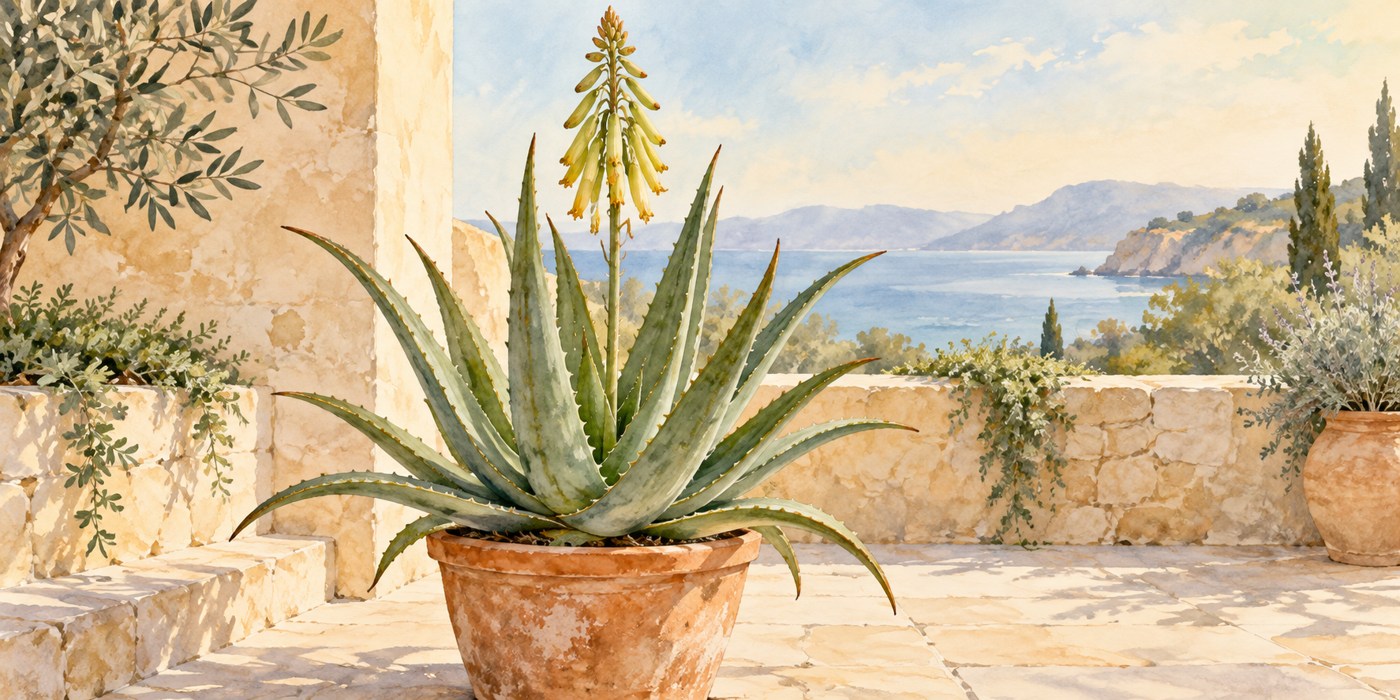
The RHS describes Aloe vera as having long clusters of yellow-green tubular flowers. The flower stalk rises above the rosette. NC State also mentions its tubular flowers and notes that the plant can flower repeatedly during its life. [1][2]
Look at the whole plant before focusing on a detail. A side-on photo shows where the stalk starts and how it separates from the leaves. Then photograph the cluster: buds and open flowers don't always look the same. Save both images with the date.
An identified plant helps you interpret the flowers
The genus Aloe includes many different species. Not every photo of aloe flowers is of Aloe vera. Keep the nursery label and use the full name when looking up a botanical profile. The colour of a single flower isn't enough to confirm an identification.
What to check if your aloe hasn't flowered yet
The absence of flowers alone doesn't diagnose a problem. Instead of buying fertiliser based on a photo from the internet, start by describing the real conditions: how long you've had the plant, where it is and what has changed recently.
The RHS guide to aloes highlights plenty of light, ventilation and compost that doesn't stay wet. These points guide cultivation but aren't a recipe guaranteeing flowers in a set number of weeks. [3]
A check you can compare
Choose a regular time to observe the spot. Note whether it gets direct light, whether a cover filters it and whether another plant or a wall casts shade. Repeat at another time of day. It's a simple way to replace "I think it gets a lot of sun" with a description you can share.
Also check that the pot lets water drain out. Keep to the watering approach in our general guide and adapt seasonal advice to your home. A British calendar doesn't automatically describe how an aloe grows on a patio in Tenerife.
How to support flowering without changing everything
When a stalk appears, avoid turning every change into a new intervention. We suggest keeping a short record and continuing with the care that suits the plant. If you want to change its position, pot or feeding, note each decision so you can later understand what you did.
We don't recommend one fertiliser dose for every product or a "trick" to force flowering. Before using any product, check its intended use and instructions. If the plant shows deterioration you can't interpret, take your notes and photos to a garden centre.
Your flowering log
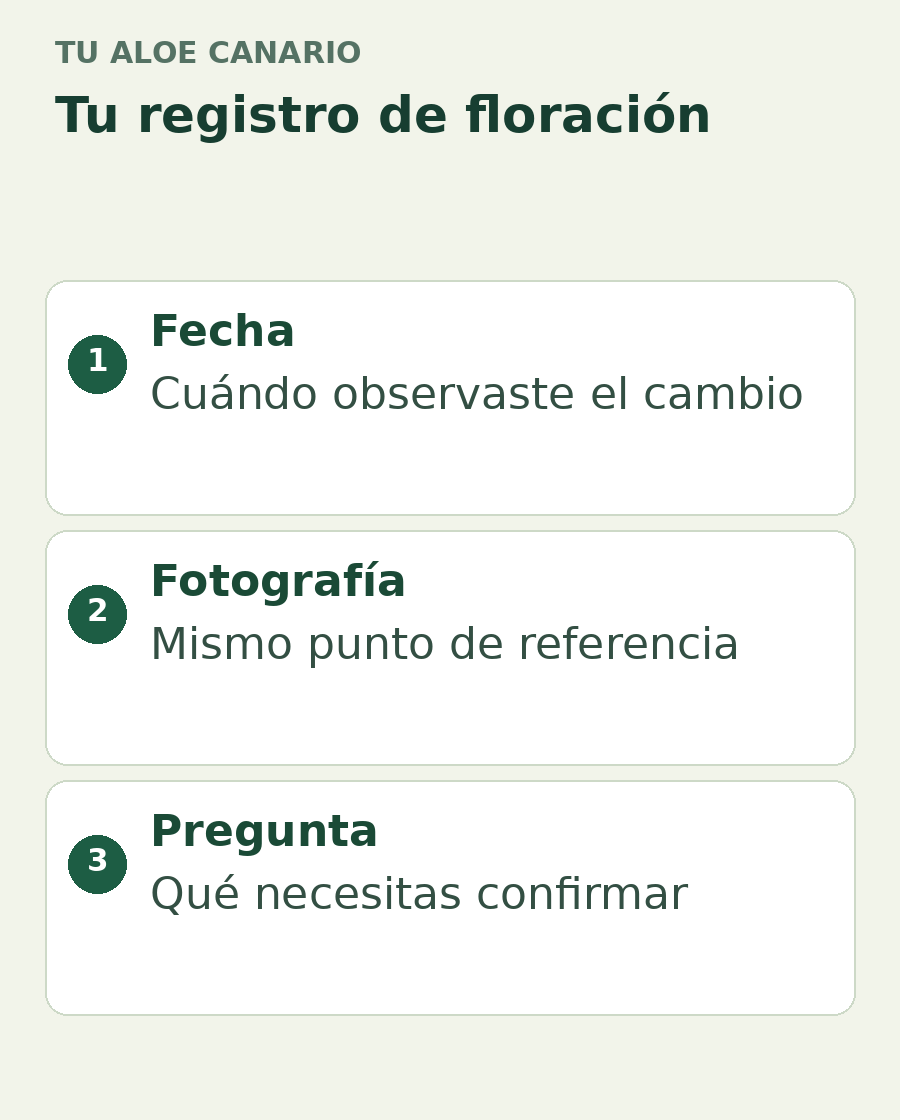
Give the plant its own page and note: the name on the label; the date you first saw the stalk; location; a general photo; a photo of the cluster; and later changes. Add space for questions. You don't need to measure every day for the record to be useful.
A particularly clear comparison is to photograph from the same point, with a size reference placed nearby without touching the flowers. Keep the original files and write down what you see: "three open flowers" is an observation; "it's missing a nutrient" is an explanation that would need checking.
Frequently asked questions
Does aloe vera always die after flowering?
NC State describes the possibility of repeated flowering. We shouldn't automatically apply the behaviour of Agave americana, another species we compare in our identification guide. [2]
Can I tell when it will flower just from its size?
A single photo or measurement doesn't let us set a date. Gather the plant's identity, history and growing conditions before looking for an explanation.
Do the flowers prove the quality of an aloe cosmetic?
Observing an ornamental plant and documenting a cosmetic answer different questions. To choose a product, check its specific formula, use and labelling.
Learn more
Continue with our guide to aloe vera in pots. If you're unsure of your plant's identity, see the differences between aloe vera and agave.
Sources
[2] NC State Extension · Aloe vera
[3] RHS · Guide to the genus Aloe
Sources consulted on 30 October 2026.

Comments (0)