
Shopping Cart
- Aloe vera uses
- 0 likes
- 94 views
- 0 comments
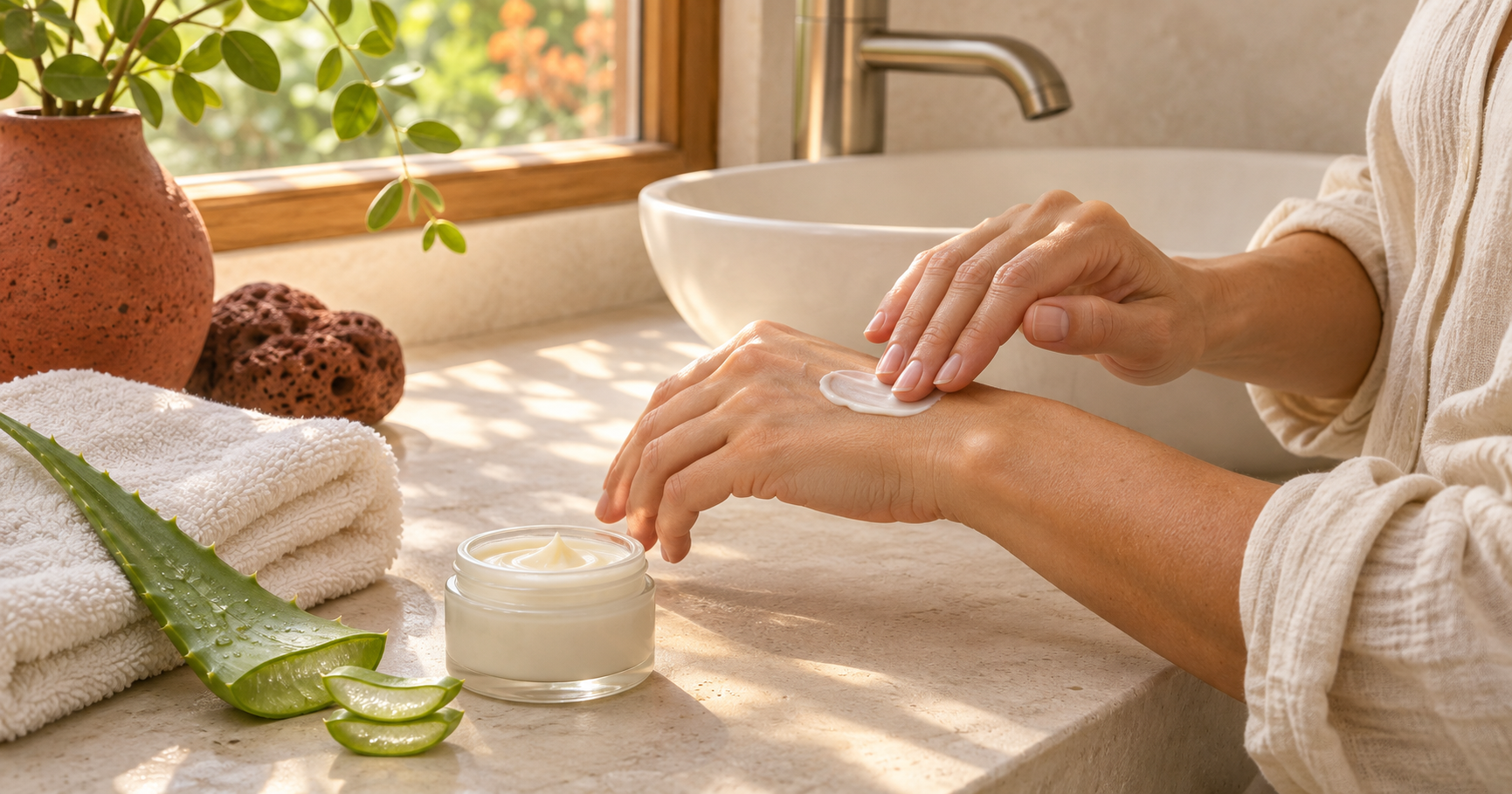
There are times when your hands are the first thing you notice: tight after washing, rough on the knuckles, cuticles lifting. It usually coincides with cold weather, washing many times a day or doing the dishes without gloves. You don't need to stop washing them – it's a hygiene habit worth keeping – but you can change how you treat them just before and just after.
Why they get so dry
Every wash removes some of the lipids that protect the skin. If the water is very hot, the soap is harsh or your hands stay damp in cold air, the skin loses water more easily and you get tightness, flaking and sometimes small cracks. The American Academy of Dermatology (AAD) lists cold, dry air, frequent washing, alcohol-based sanitisers and contact with cleaning products among the usual causes.
How to wash without punishing them
- Lukewarm water, not hot. It cleans just as well and dries less.
- A gentle soap. Ideally without strong fragrance. If you prefer a bar, our aloe vera soaps include gentle options.
- Pat dry. With a clean towel, without rubbing, and don't forget between your fingers.
- Gloves for washing up and cleaning. Detergents and bleach are among the most drying things your hands touch.
When to apply the cream
The best moment is straight after washing, while the skin still holds a little moisture. AAD dermatologists advise applying cream before your hands are completely dry. A practical tip: keep one tube by the sink and another in your bag. An amount the size of a chickpea is usually enough; spread it over the backs of your hands, between your fingers and around your nails, where dryness shows most.

Our aloe vera and argan hand and nail cream is designed for that repeated use: it spreads quickly and lets you get on with your day without sticky hands. Our hand and nail cream guide explains how to get the most from it.
Knuckles, cuticles and night-time
Knuckles and the skin around the nails crack first because they stretch and get wet more often. At night you can apply a more generous layer and, if it's comfortable, sleep in cotton gloves so the cream stays on your skin for hours. For very rough areas, some people prefer a richer texture, such as our aloe vera and calendula ointment.
Avoid pulling at loose cuticle skin: it often leaves a small wound that takes longer to close. Soften it with cream instead and, if it bothers you, trim it carefully with clean scissors.
A simple routine
- Wash with lukewarm water and a gentle soap.
- Pat dry.
- Cream straight away, between the fingers too.
- Gloves for washing up and for the cold.
- An extra layer before bed.
When to seek advice
If the cracks bleed, the skin becomes inflamed or very itchy, blisters appear or nothing improves in two or three weeks despite looking after it, see your doctor or a dermatologist. It may be dermatitis that needs different care.
Learn more
If the rest of your skin feels dry too, read our guide to dry skin in winter. And for your lips, which face the same cold, see how to care for chapped lips.
Sources
For information only, not a substitute for medical advice. The products mentioned are cosmetics.
Juan Carlos García, Tu Aloe Canario. A Canarian brand working with aloe for more than 20 years: Canarian aloe vera, selected and shipped from Tenerife.
Comments (0)