
Shopping Cart
- Tu Aloe Canario
- Canarian Aloe Vera
- 0 likes
- 162 views
- 0 comments
There are days when we change jackets and keep watering our plants as if nothing had happened. With aloe vera it's worth pausing for a moment: perhaps it's getting less light, the compost takes longer to dry or the rain is already doing part of the job. Before adding water, we prefer to look at what has changed around the pot.
Winter isn't the same everywhere, either. A sheltered terrace on the coast of Tenerife, an exposed balcony at higher altitude and a windowsill in Germany are different situations. So our approach starts with where your plant lives, not a date on the calendar.
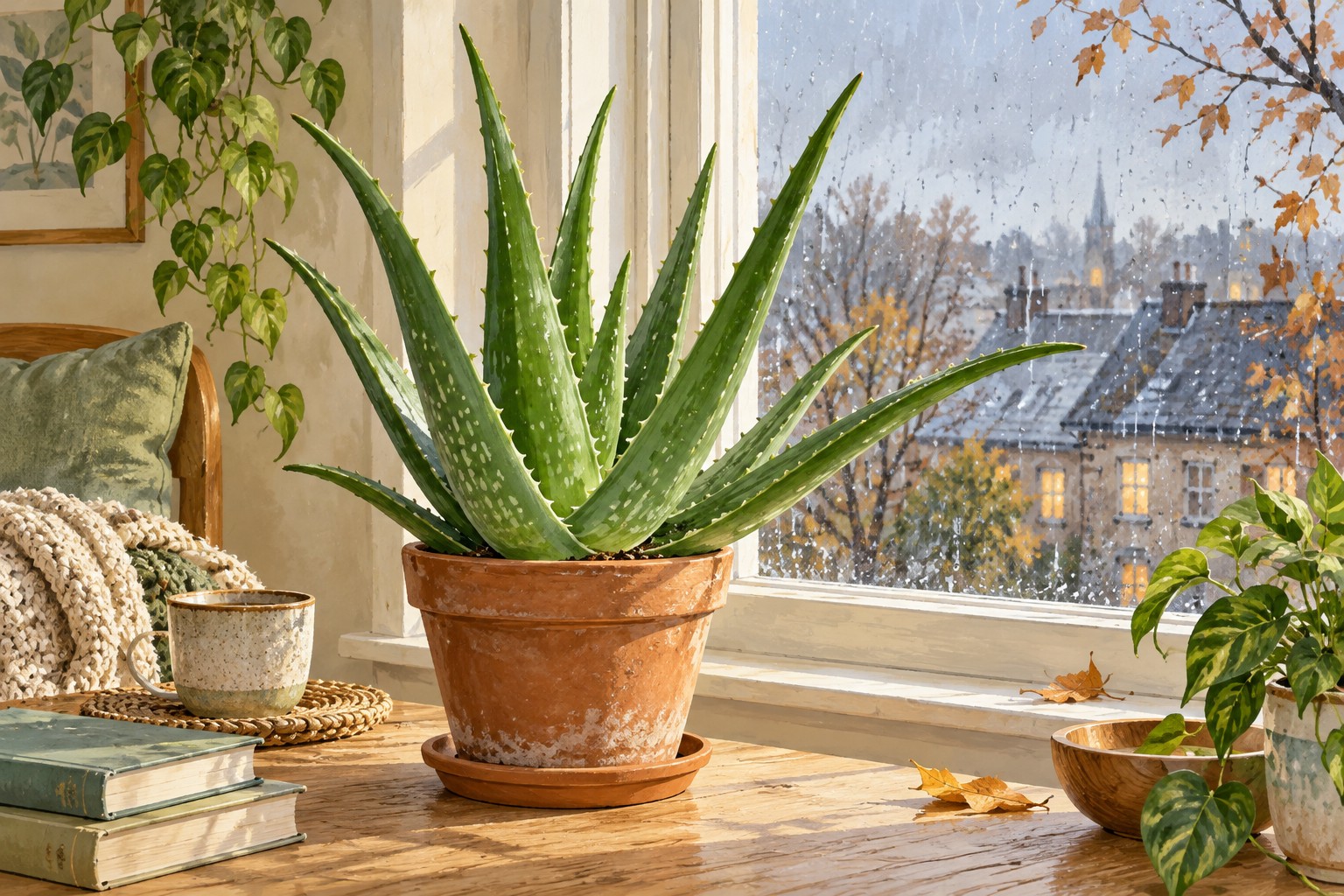
Editorial illustration of an aloe by a window on a rainy day. It does not show any of our company premises.
What we'd check first when the season changes
The Royal Horticultural Society recommends a free-draining compost for Aloe vera and very sparing watering during winter dormancy. That advice refers to particular growing conditions: apply it by watching how active the plant is, the light and how quickly the compost dries. It doesn't mean every aloe should get the same amount of water on the same day in November.
We'd look at light first. If the sun comes through the window for less time, or an awning leaves the pot in shade, a spot that worked in summer may need rethinking. Look for a bright, sheltered place. If you decide to move it, avoid switching suddenly from a sheltered position to a much more exposed one.
We'd also check the nights, not just the pleasant midday temperature. A frost forecast means protecting your aloe; it's not a plant to leave to freeze. Indoors, make sure the chosen spot still gets good light and isn't right next to a heater or a cold draught.
When rain becomes watering we hadn't counted on
Imagine a pot left outside for several rainy days. If the compost is already damp, adding the usual watering out of habit no longer makes sense. First check how the water drains and whether it's sitting in the saucer or inside an outer pot.
A pot with holes needs a real way out. If those holes lead into a container full of water, the whole set-up isn't draining as expected. Remove the standing water and find an arrangement that lets you check the bottom without taking everything apart each time.
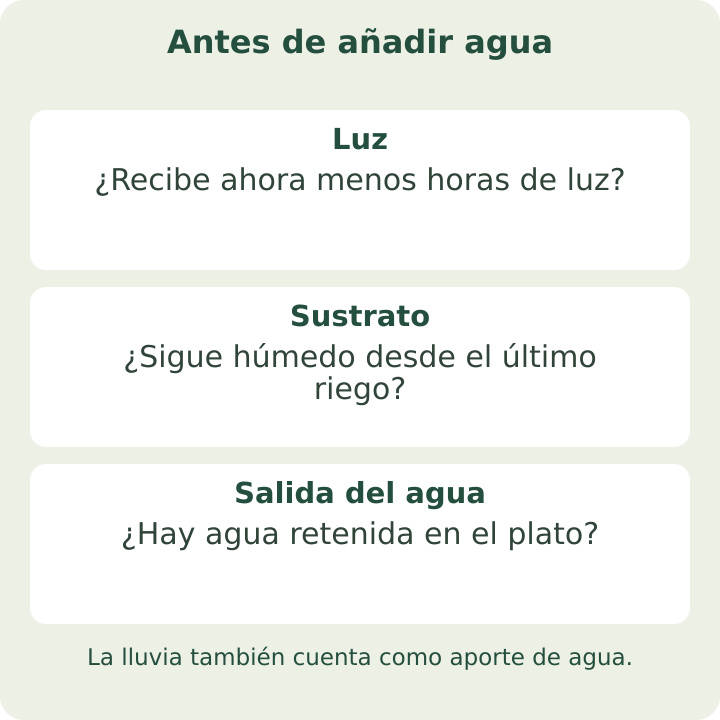
Editorial diagram: before adding water.
Indoors the opposite can happen: it hardly rains where we live, but the pot still dries slowly because it gets less light and is cooler. We don't need to copy a routine from one home to another. The reference is still the state of the compost and the growing context.
Three situations to think about for your own aloe
On a bright, sheltered terrace, we'd check how much rain reaches the plant and whether water is collecting. On an exposed balcony, we'd also look at the cold and wind forecast. In a darker indoor spot, we'd start by improving the position before trying to make up for it with more water.
These are examples of observation, not diagnoses. A leaf of a different colour or slow growth doesn't identify a cause on its own. If something changes, a photo of the whole plant, another of the compost and a note about recent watering help far more than changing water, fertiliser and position all at once.
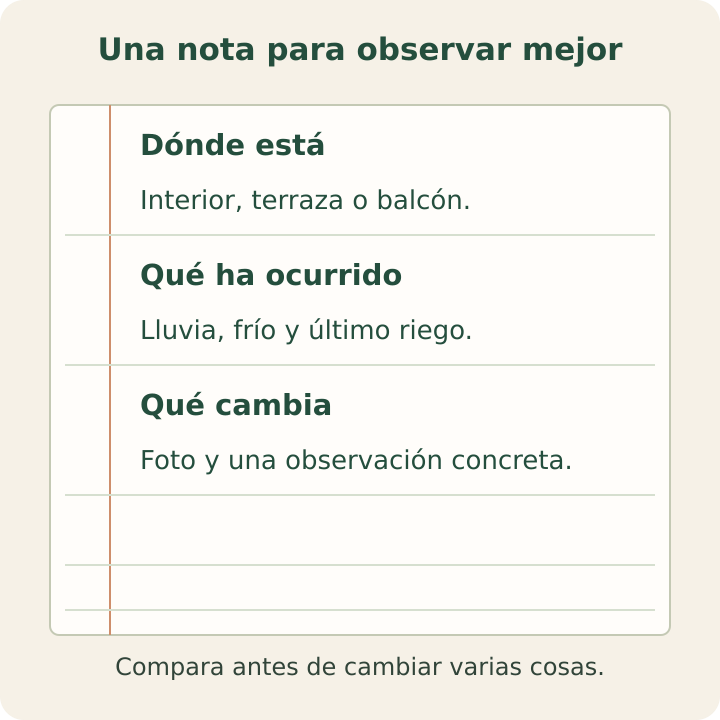
Editorial diagram: a note to observe better.
Our approach for these months
We'd stick to a simple routine: check the light, look at the compost, check the drainage and see what cold is forecast. Then note what we did. That way we can link the plant's progress to specific changes, without chasing a perfect calendar that doesn't know our window.
Caring for an aloe in winter is largely about paying attention. If you've already found a spot that works, there's no need to change everything with each season. Adjust what has really changed and let observation guide the next step.
Learn more
Continue with our guide to aloe vera in pots or find out how to observe its flowering.
Sources for further learning
Tu Aloe Canario · Aloe Care Privilege

Comments (0)