
Shopping Cart
A small rosette may appear next to the base of your aloe. Before pulling it out or repotting it, it's worth checking what you're looking at and preparing the job. At Tu Aloe Canario we offer a guide focused on separating offsets (pups) for ornamental growing.
The main question is whether we can separate a small plant while keeping its roots. We won't use a universal size as a reference or promise that every pup will thrive. The state of the plant and its conditions matter more than a date on the calendar.
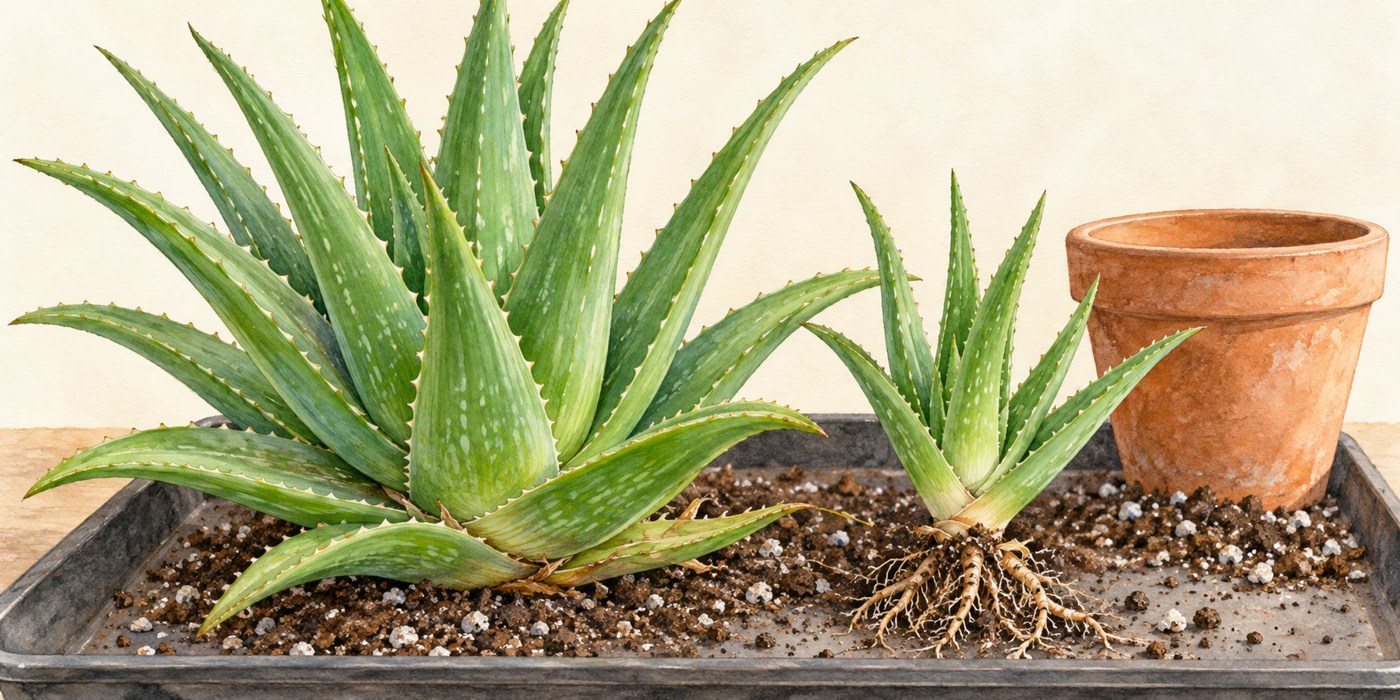
What we mean by an offset
The RHS describes offsets as small plants produced around a mature aloe and explains how to separate them. Its Aloe vera profile mentions this method of propagation, and NC State lists division as a way to multiply the plant. [1][2][3]
Look for a small rosette with its own leaves. A single loose leaf isn't the same thing. If you can't tell them apart, photograph the base and ask a garden centre before doing anything. Our aim is to work with an identified plant and look at where it joins and at its roots.
Prepare the space before taking the plant out
Use a large tray to catch the compost, a pot suited to the offset and a cactus or succulent compost that drains well. Having them ready means the roots aren't left exposed while you look for materials. Protect your hands when handling the toothed leaf edges.
The RHS profile places separation in spring or early summer in its British context. In the Canaries, it's better to look at actual growth and location, rather than treating those months as an order for every microclimate. [2]
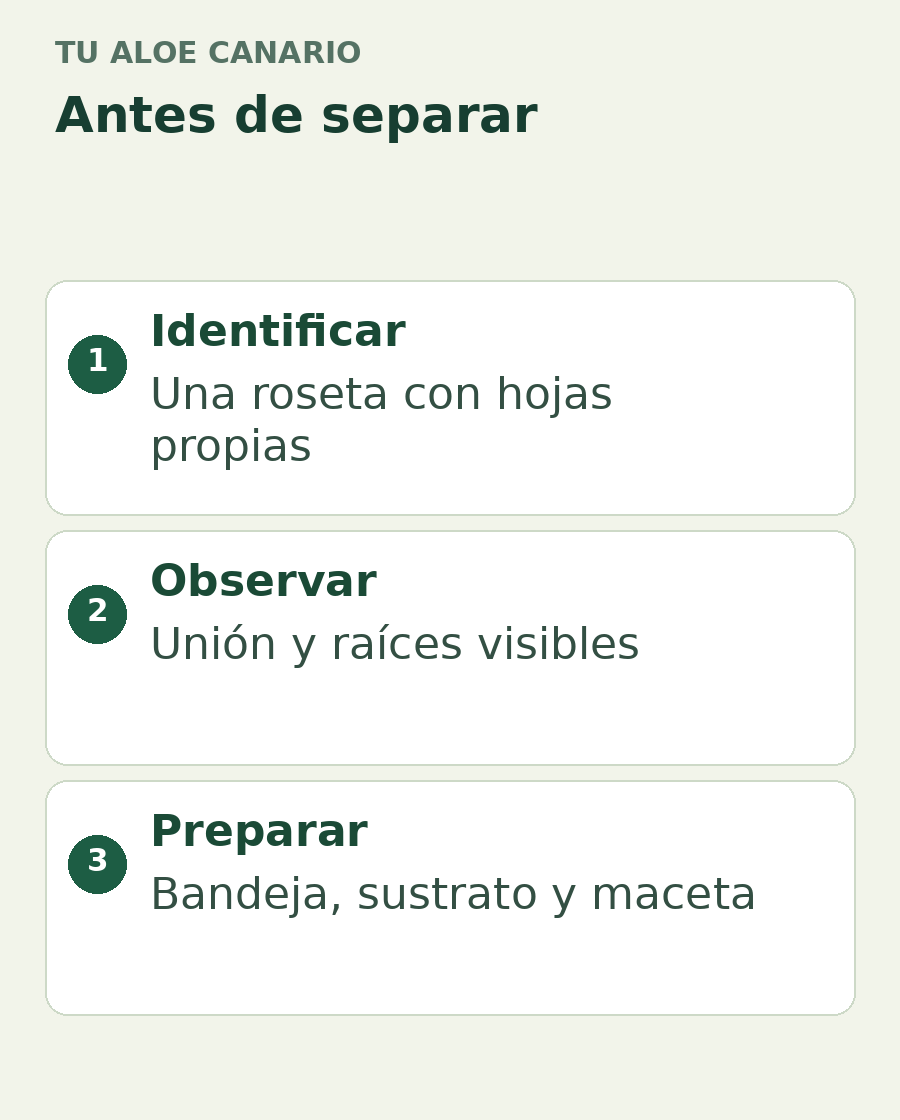
Look at the roots before separating
The RHS educational guide suggests carefully lifting the whole plant out of the pot onto a tray and separating the offset, ideally keeping some roots. [1] The useful step is to see the join clearly before applying any force.
If you can't find a separation point you understand, or the plant is badly damaged, stop and ask for help with photos. There's no need to finish the repotting at all costs. The guide doesn't prescribe a compulsory cut or a minimum root length valid for every plant.
A small plant doesn't need a huge pot
Prepare a container that suits the plant and has a drainage hole. The RHS propagation guide uses a pot suited to the offset and a compost with a mineral component. [1] Check the properties of the mix you buy rather than assuming any garden soil will work the same.
Place the plant so it's stable and keep its position visible so you can compare later. We don't recommend burying the leaves to hide a lack of stability. If you're not sure how to position the neck and roots of your plant, check with the garden centre before finishing.
After repotting, organise follow-up
The educational guide we consulted suggests a settling watering and a bright position. We don't turn that example into a fixed amount of water: the mix, the container and the state of the roots can change how you manage it. Avoid keeping the compost constantly wet and adapt care to the real conditions. [1][2]
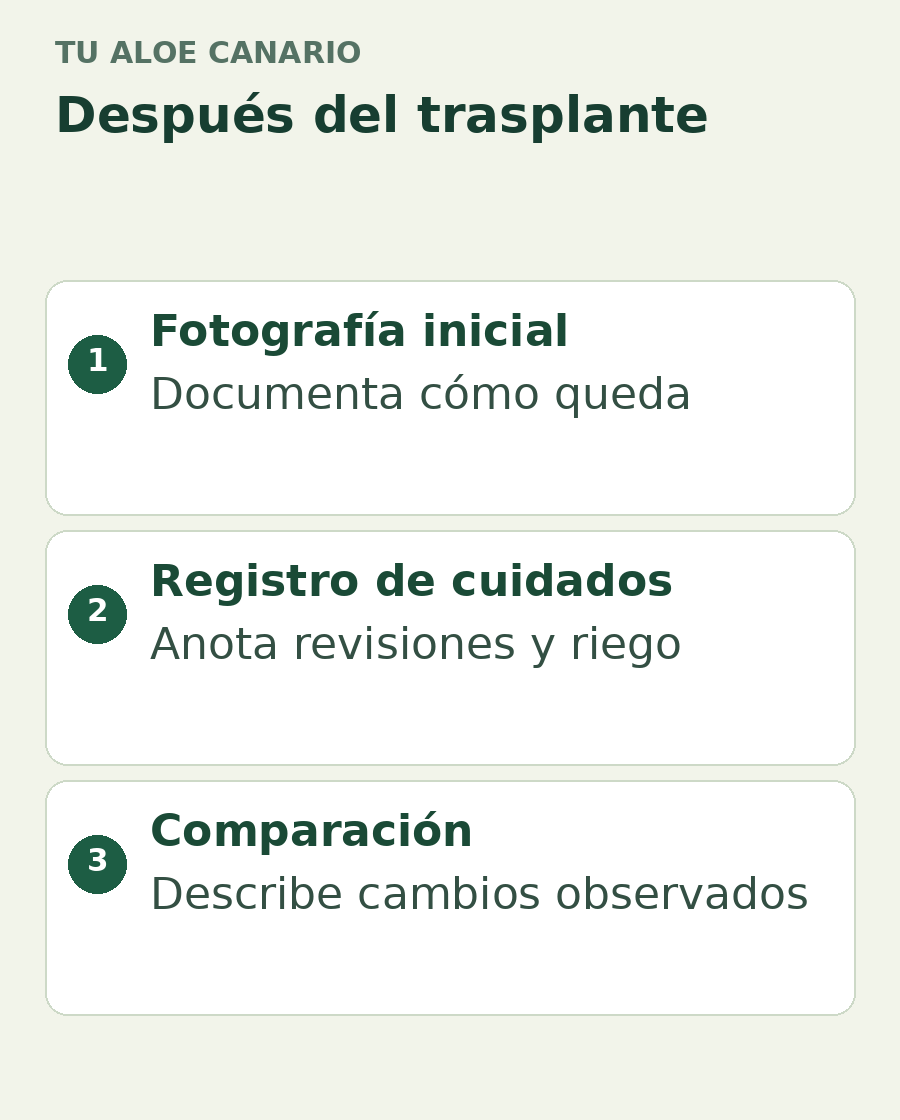
We suggest taking a photo when you finish, noting the compost used and recording when you check it. Describe changes concretely. "The pot still feels heavy and the compost is damp" tells you more than "it needs attention".
When it's better to wait
If you can't identify the offset, can't see how to keep its roots, or would have to improvise a pot and compost, sort those points out first. Waiting to gather information is a sensible growing decision. Wanting to multiply an aloe doesn't mean you have to separate every shoot that appears.
Keep a photo of the mother plant too. That way you can follow two stories: how the original rosette develops and how the separated one adapts. Avoid moving it every few days without noting it, as that makes it harder to interpret what happened.
Frequently asked questions
Do we have to separate every offset?
There's no obligation to get as many plants as possible. Decide based on the state of the plant, the space you have and your ability to care for new ones.
Can we promise an offset will root within a week?
We don't set a universal timescale. Use your log to follow its progress and ask for advice if you notice deterioration you can't interpret.
Does this article teach how to make gel for the skin?
No. Separating offsets is an ornamental growing activity. A houseplant and a formulated cosmetic involve different considerations.
Learn more
Complete the job with our guide to light, pots and watering. If you need to confirm the species, see the comparison between aloe vera and agave before handling it.
Sources
[1] RHS · Educational resource on indoor plants and propagation
[2] RHS · Aloe vera
[3] NC State Extension · Aloe vera and propagation by division
Sources consulted on 30 October 2026.

Comments (0)