
Shopping Cart
- Tu Aloe Canario
- Canarian Aloe Vera
- 0 likes
- 262 views
- 0 comments
TU ALOE CANARIO · GROWING GUIDES
Your aloe has been in the same spot for a while and you'd like to see it grow. Maybe you've thought about buying a fertiliser, or you have one put away and wonder whether it's time to use it. Before opening the bottle, we'd ask one question: what does this plant actually need right now?
In this guide we explain how to decide whether to feed a potted aloe vera. We'll look at its growth, the compost it's in and the instructions for the product you plan to use. With those three pieces it's easier to decide and avoid adding something just for the sake of doing more.
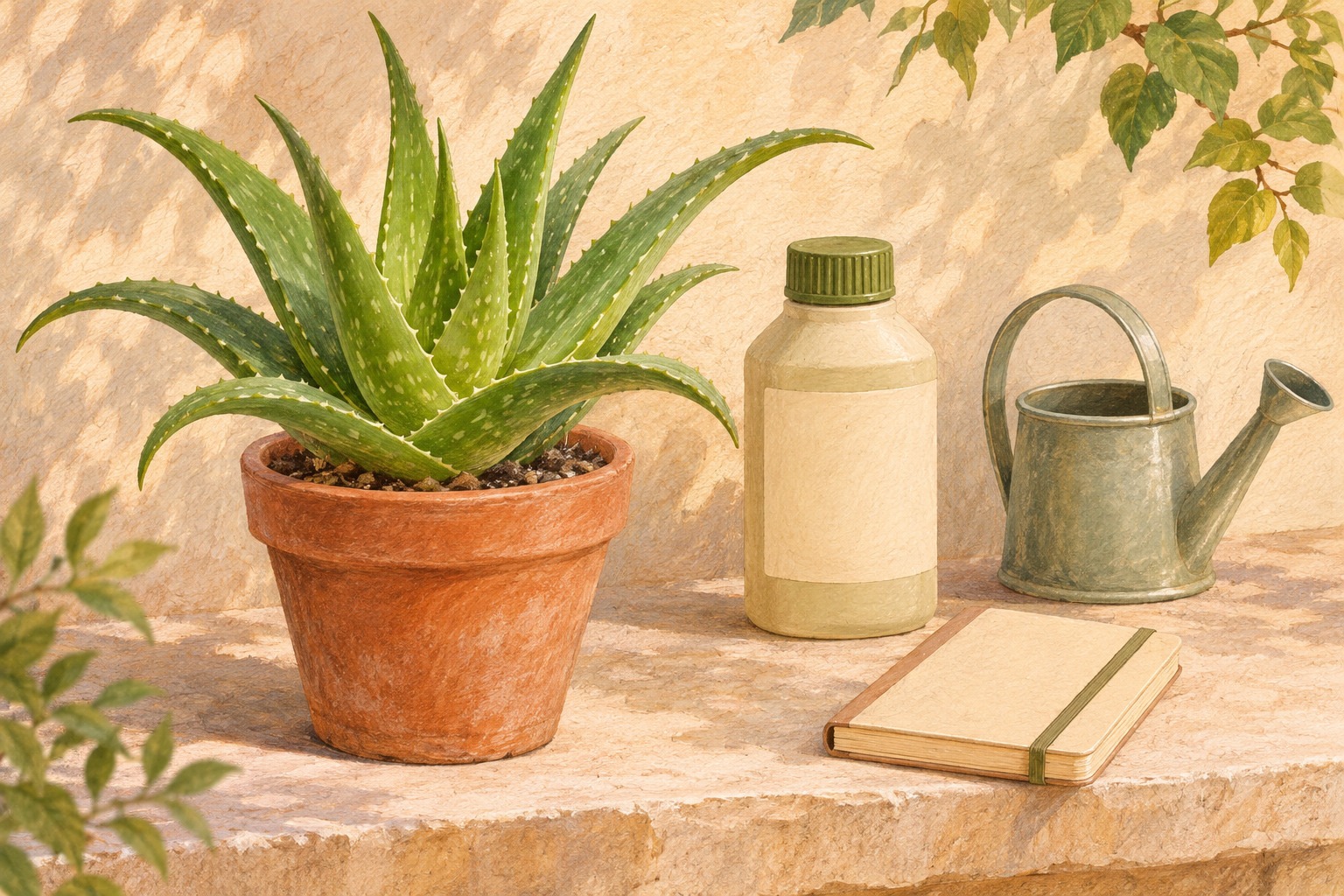
Editorial illustration of growing supplies. The bottle is generic and does not represent a product we sell or an application guide.
Aloe needs nutrients, but not much fertiliser
The University of Minnesota explains that succulents have relatively low nutrient needs. In its Aloe vera profile, the Royal Horticultural Society allows for liquid fertiliser during part of the growing season. Both references help us put care in context: feeding can have its place without becoming a constant intervention. [1] [2]
We'd start by checking whether the plant is active and what has changed around the pot. If it gets little light or the compost stays wet, adding fertiliser out of habit leaves those first questions unanswered. Feeding is part of growing; light, watering and drainage need attention too.
Before buying, check what's in the compost
The information you're looking for may be on the bag of the mix you used. The RHS reminds us that many commercial composts already contain fertiliser for a certain period. It's worth checking the specific product and its information, especially if you've just repotted the plant. [3]
Keep the name of the compost and the date you repotted. If you no longer have the bag, ask the garden centre where you bought it. That detail helps you judge whether to add more; a photo of the leaves alone doesn't tell us how much fertiliser is still available.
If you also notice deterioration you can't interpret, gather a photo of the whole plant, one of the base and your watering notes. We'd rather clarify the cause before choosing a fertiliser as the answer to any change in colour.
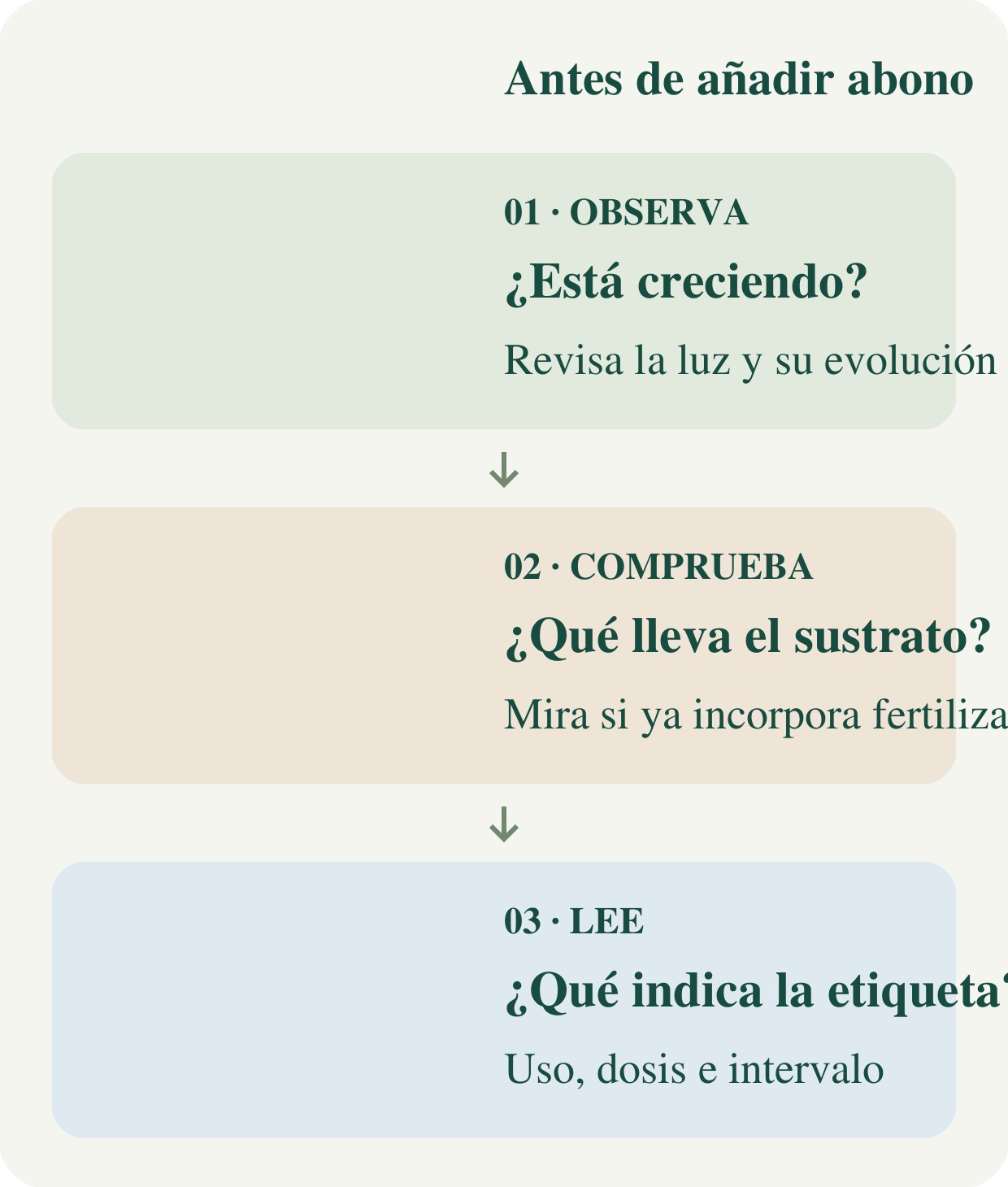
Editorial diagram from our guide. It orders the preliminary questions; it does not set amounts or diagnose a deficiency.
When to feed? Growth matters more than copying a calendar
Plants need nutrients when they're actively growing. The RHS points out that this period depends on the local climate and light levels. Its reference months apply to the British context and don't automatically transfer to every home. [3]
You might have one aloe on a bright patio in Tenerife and another behind a window in Germany. Even reading the same guide on the same day, we don't yet know each plant's conditions. What matters is the light each pot receives and the activity you see in it.
That's why we don't suggest feeding every time you water or choosing a fixed date for every aloe. Look for guidance suited to the species and compare it with the fertiliser's instructions and your plant's activity.
The label to read with the bottle in front of you
The University of Maryland explains that fertilisers come in different forms and should be prepared according to the manufacturer's directions. It also warns that too much can lead to salt build-up and excessive, leggy growth in indoor plants. [4]
Intended use
Check which plants and conditions it's intended for. If you're unsure whether it suits aloe, ask before using it.
Form and amount
A liquid, granules and a slow-release product aren't measured the same way. Look for the dose and application method of the one you have.
Interval
Frequency and preparation should be read together. Don't take the amount from one label and the schedule from another.
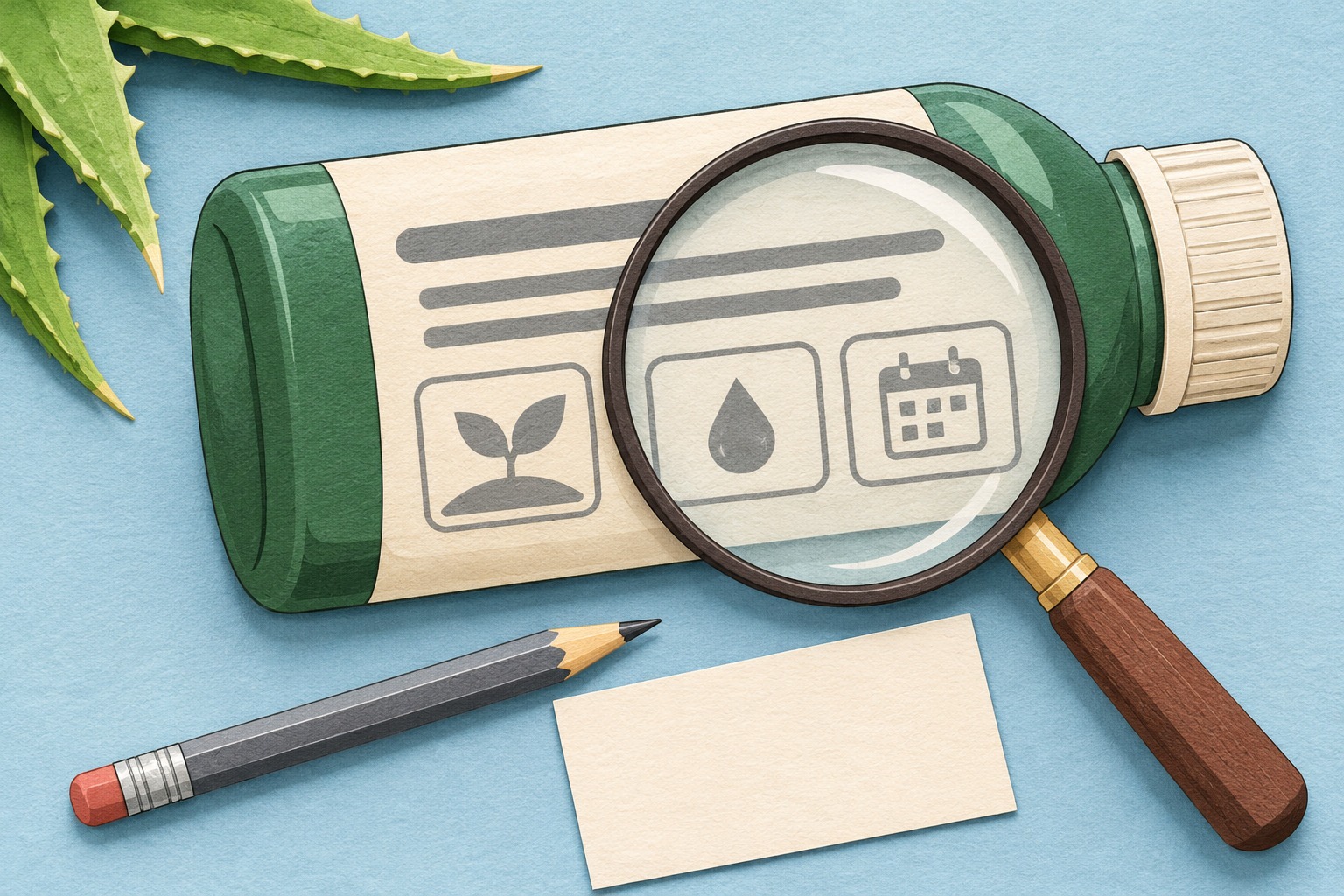
Editorial illustration with a fictional label. The symbols are supporting graphics, not real manufacturer instructions.
If the label has worn off or you can't identify the product, keep the bottle closed and find out what it is before using it. There's also no need to improvise home-made mixtures to fill in missing information.
A short note is worth more than another splash
If you do decide to feed, note the product, the date and what you applied according to its directions. Keep a reference photo and record later changes. That way you can explain what you did without having to reconstruct it weeks later.
We'd stick to this habit: check before adding. Caring for an aloe also means recognising when an intervention makes sense and when it's better to keep observing. We don't need to fill the shelf with products to pay attention to our plant.
Learn more
To review the basics of growing, continue with our guide to aloe vera in pots. If the light, rain or nights have changed, we explain how to adjust its care in winter. And if your question is about flowers, read how to observe aloe flowering.
Sources for further learning
[1] Royal Horticultural Society · Aloe vera profile
Species reference and feeding guidance in its growing context.
[2] University of Minnesota Extension · Cacti and succulents
Moderate fertiliser needs of succulents. We don’t transfer its general doses to every aloe.
[3] Royal Horticultural Society · How plants absorb nutrients
Active growth, local context and fertiliser already in commercial composts.
[4] University of Maryland Extension · Fertilizer for indoor plants
Forms, reading instructions and the risks of overfeeding indoor plants.
Sources reviewed on 6 November 2026.
Tu Aloe Canario · Aloe Care Privilege

Comments (0)