
Shopping Cart
- Tu Aloe Canario
- Canarian Aloe Vera
- 0 likes
- 130 views
- 0 comments
Tu Aloe Canario · Looking at our plant
You go to look at your aloe and spot something white between two leaves. You hadn't noticed it yesterday; today it's all you can see. Before looking for a remedy, we suggest taking a closer look in good light and finding out what's really there.
A possible mealybug deserves a check, but a blurry photo won't settle the identification. In this guide we start with what you can do at home: observe, move the pot apart if you suspect a pest, and gather useful information to decide the next step.
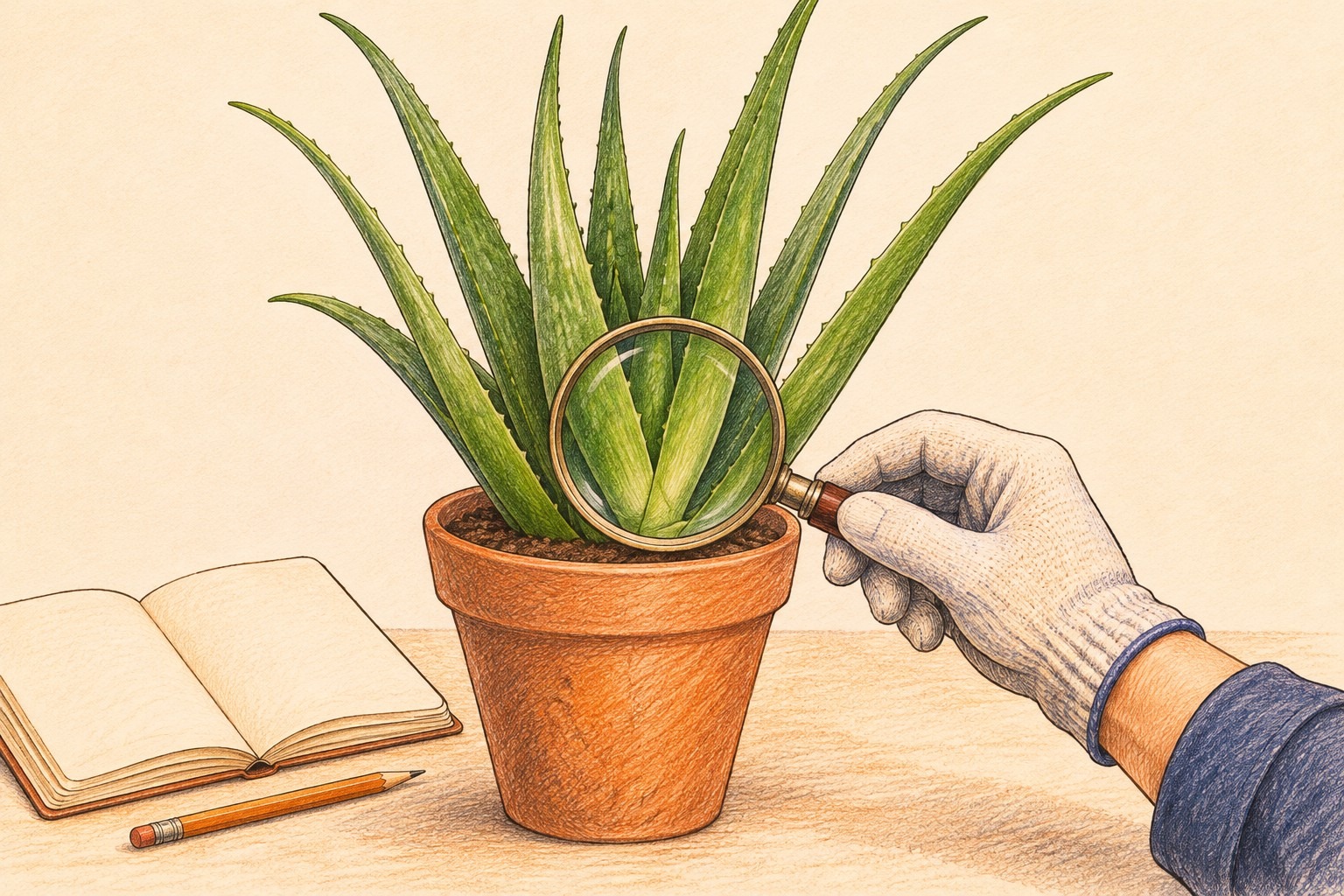
Editorial illustration of an aloe check. The scene is imaginary and does not show an identified pest.
Even a tough aloe can have visitors
The Royal Horticultural Society's Aloe vera profile lists mealybugs among its possible pests. So a plant that copes with dry spells isn't necessarily free of insects. They're different abilities.
We like to remember this when talking about Canarian aloe vera too: where a plant is grown doesn't replace looking at the plant itself. This guide refers to ornamental potted plants; it doesn't describe the plant-health situation of any particular farm.
What would make us take a closer look
UC IPM, the University of California's integrated pest management programme, describes mealybugs as small, soft insects usually covered in wax. They may cluster in sheltered spots and can be confused with other insects that also produce waxy material.
The RHS points to clues such as white, cotton-like wax and sometimes sticky surfaces from the honeydew they excrete. The insects may be found under that covering. These signs point you towards a check; they aren't enough to name a species or explain every mark on a leaf.
Describe what you see before naming it
Try writing "there are several white clusters where these leaves join" instead of "my aloe has a disease". The first sentence lets you go back to the same spot and compare. You can then confirm or correct the explanation without losing the original observation.
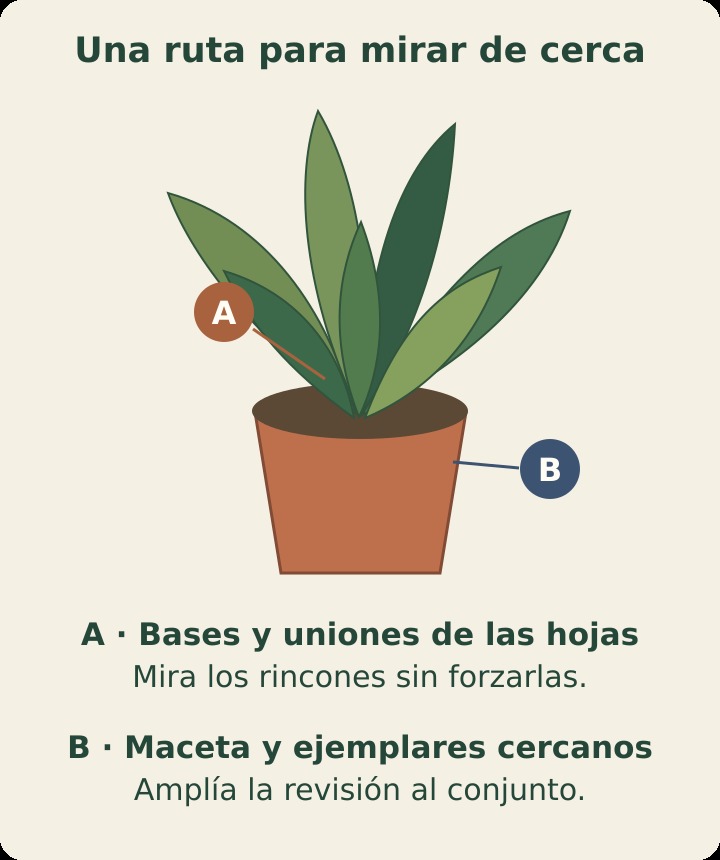
Schematic observation map. It does not show a pest or exact botanical proportions.
Check the nooks as well as the visible parts
The university guide to houseplant problems recommends examining leaf folds and bases. On an aloe, start with the visible joins of the rosette and then check the rest of the plant. A magnifying glass can help; the important thing is not to force the leaves apart to get a photo.
Check whether what you've found is limited to one spot or appears in several places. Look at the pot and nearby plants too. Monitoring plants and containers is part of UC IPM's recommendations.
Giving that pot some space is a useful first step
If you suspect a pest, temporarily move the plant away from those that seem unaffected. The RHS recommends this for houseplants to reduce spread. Choose a spot where you can keep observing the aloe and caring for it, without leaving it next to other leaves.
Use the opportunity to check any recent additions. The same organisation advises inspecting new plants and keeping them apart from your collection where possible. Keeping them apart helps you observe them before grouping them; it doesn't by itself prove they're free of insects.
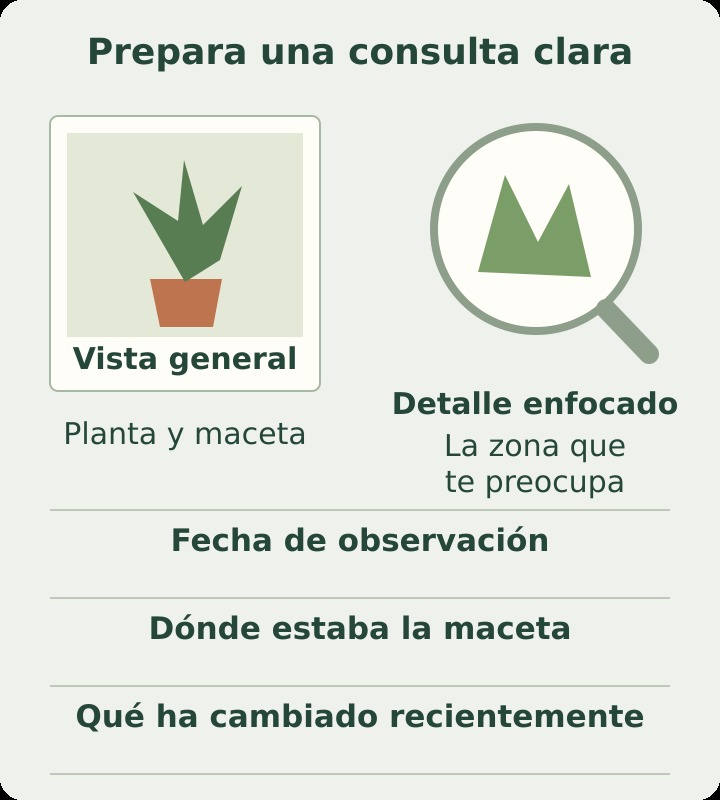
Editorial card for preparing photos and notes. The drawings cannot be used to identify an insect.
And after you find the source?
UC IPM includes removing visible mealybugs by hand. If you've confirmed the identification and the infestation is small and easy to reach, that can be part of managing it. It doesn't guarantee you've reached every corner: the RHS notes that where they hide can make removal difficult.
If many areas are affected, the problem comes back or you don't recognise what you see, take your photos to a garden centre or plant-health service. Choosing a treatment requires knowing the problem and the plant's condition. This guide doesn't prescribe a product or treatment schedule.
The next check counts too
Before moving or cleaning anything, keep one overall photo and one focused photo of the area. Note the date, where the pot was and whether any new plant has arrived. When you check again, look at the original spot and other parts of the aloe.
We'd stick to that habit: look calmly and keep a reference. If you find something again, you'll be able to explain where and when it appeared. And if you need help, you'll arrive with something more useful than a hastily chosen name.
Learn more
Complete your observation with our guide to caring for potted aloe vera. If light, rain or temperature change, we explain how to adjust its care in winter.
Sources for further learning
RHS · Aloe vera profile
Possible pests of the species and handling precautions.
RHS · Mealybug
Appearance, signs and how hard it can be to reach infestations.
RHS · Sap-feeding insects on indoor plants
Inspection, separating plants and observing new plants.
UC IPM · Houseplant problems
Checking leaf bases and folds. University guidance; not a diagnosis of your plant.
UC IPM · Mealybugs
General identification, removal by hand and monitoring plants and containers.
Tu Aloe Canario · Aloe Care Privilege
Sources reviewed on 5 November 2026.

Comments (0)